
 EN
EN
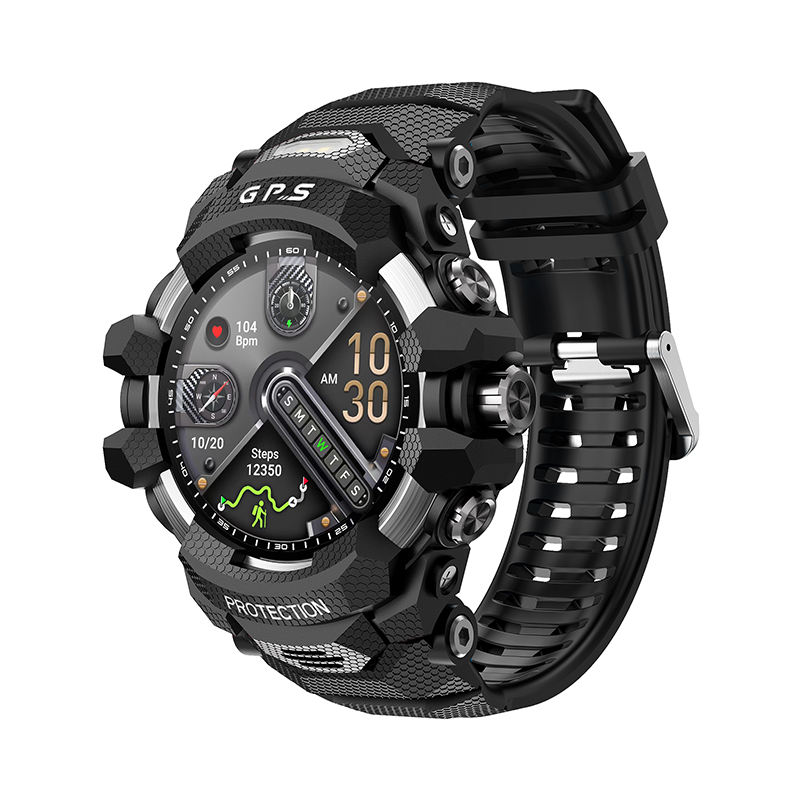
The Gym Is Not a Running Track—And Your Watch Should Know That
Most sports watches on the market today are built for runners. They excel at tracking distance, pace, and cadence. But step into a weight room with a typical running watch, and the data starts to fall apart. The movements are different. The metrics that matter are different. And the way the watch sits on the wrist during a deadlift or a bench press is completely different from how it behaves during a five‑kilometer jog.
Choosing a sports smart watch for gym workouts and weight training isn't about picking the most expensive option or the one with the longest feature list. It's about understanding what actually works inside a gym environment—and what doesn't.
What Strength Training Actually Demands from a Watch
A gym session is chaotic in ways that running isn't. There are sudden bursts of movement, heavy loads that cause the wrist to flex and extend, and plenty of rest periods between sets where the watch needs to stay accurate without constant input.
The core requirement is simple: the watch needs to track heart rate reliably during resistance exercise. Studies have shown that smartwatches demonstrate relatively high validity for heart rate measurement during resistance exercise, though energy expenditure estimation tends to be less accurate. That means a user can generally trust the heart rate data coming off the wrist, but calorie burn numbers during a heavy squat session? Those should be taken with a grain of salt.
One thing that often gets overlooked is how the watch handles rest intervals. During a heavy set of deadlifts, heart rate spikes. During the two‑minute rest that follows, it drops. A watch that averages out that data or smooths it too aggressively ends up hiding the real story—the actual cardiovascular load of the workout.
Auto‑Recognition vs. Manual Logging: Which One Actually Works?
Many newer watches advertise automatic exercise recognition. Some models now support automatic detection for up to 25 different strength exercises, theoretically eliminating the need to manually log every movement. In practice, the reality is more mixed.
Take a simple shoulder press. Arm‑based movements tend to be counted fairly accurately because the wrist motion is clear and consistent. But a single‑leg lunge? That movement involves the whole body, and the wrist stays relatively stable while the legs do most of the work. Watches often struggle to accurately map that kind of movement.
There's a genuine trade‑off here. Auto‑recognition saves time and reduces friction during a workout. But it's not perfect, and it performs better on some exercises than others. For users who want precise tracking on compound movements like squats or deadlifts, manual logging through a companion app often delivers more reliable results—even if it takes an extra few seconds between sets.
The Battery Question Nobody Asks Until It's Too Late
Here's something that doesn't show up in marketing materials: gym sessions drain battery differently than runs do. The constant screen wake‑ups, the repeated start‑stop of sets, the vibration feedback between rests—all of it adds up.
A watch that claims seven days of battery life "under normal use" might only last three or four days when used for daily weight training sessions. And if GPS is also running for outdoor warm‑up runs or commute tracking, that number drops further.
For gym‑focused users, battery life matters less in terms of total days and more in terms of consistency. A watch that dies mid‑workout is useless. A watch that needs charging every single night is annoying. The sweet spot is a device that can handle five or six gym sessions a week without needing to be babied on a charger every other day.
Readiness and Recovery—Not Just Workout Data
The best gym watches don't just track what happened during the session. They also provide context about whether the body is actually ready to handle more work.
This is where metrics like heart rate variability (HRV) and resting heart rate come into play. During sleep, the body recovers. HRV tends to increase when the nervous system is in a parasympathetic state—meaning rest and repair are happening. A lower‑than‑usual HRV reading in the morning can be a signal that the previous day's training was too much, or that sleep quality was poor.
Some platforms now integrate sleep, stress, and training load into a unified recovery score. The idea is to help users understand not just how hard they trained, but how well they're recovering from that training. For someone who trains four or five times a week, that kind of insight is arguably more valuable than the workout data itself.
A Real‑World Scenario: When the Data Told a Different Story
A few months back, a strength coach working with a group of amateur powerlifters ran a side‑by‑side comparison between wrist‑based tracking and chest‑strap monitoring over a four‑week training block. The watches consistently showed lower peak heart rates during heavy compound lifts—sometimes by a margin of eight to twelve beats per minute—compared to the chest straps. But the trend lines over the course of each session matched up closely. The watches weren't giving the exact numbers, but they were telling the same story about when intensity peaked and when it dropped off.
That's the key distinction. Gym watches aren't medical devices. They're not going to match the accuracy of a clinical‑grade ECG monitor. But for tracking relative effort, identifying patterns, and spotting when something is off, they're more than adequate—provided the user understands their limitations.
What to Look For—and What to Ignore
Here's a quick breakdown of what actually matters:
| Feature | Why It Matters | What to Watch Out For |
|---|---|---|
| Heart rate sensor quality | Foundation for all other metrics | Optical sensors struggle with rapid wrist movement |
| Strength training mode | Tracks sets, reps, and rest periods | Auto‑recognition isn't 100% reliable |
| Recovery metrics (HRV, resting HR) | Shows whether the body is ready for more work | Requires consistent overnight wear |
| Battery life | Gym use drains faster than advertised | Real‑world runtime often lower than claims |
| App ecosystem | Where the real analysis happens | Some apps are clunky and hard to navigate |
What can safely be ignored? Fancy GPS features if the watch is primarily for indoor gym use. Step counts, which tell you almost nothing about strength training intensity. And any metric that claims to measure "muscle fatigue" or "muscle load" with high precision—those are still very much in the experimental stage.
The Bottom Line
A sports smart watch for gym workouts doesn't need to do everything. It needs to do a few things well: track heart rate reasonably accurately during resistance exercise, handle rest intervals without losing the plot, and provide recovery context that helps the user train smarter, not just harder. Everything else is nice‑to‑have.
For users who train in the gym three or more times a week, the most practical approach is to prioritize heart rate sensor quality and recovery analytics over flashy features like built‑in music storage or LTE connectivity. Those things are convenient, but they don't move the needle on training quality.
HXJ has been manufacturing wearable devices with a focus on reliable sensor integration and durable build quality for the gym environment, offering options that balance performance with practical usability across different training scenarios.
Table of Contents
- The Gym Is Not a Running Track—And Your Watch Should Know That
- What Strength Training Actually Demands from a Watch
- Auto‑Recognition vs. Manual Logging: Which One Actually Works?
- The Battery Question Nobody Asks Until It's Too Late
- Readiness and Recovery—Not Just Workout Data
- A Real‑World Scenario: When the Data Told a Different Story
- What to Look For—and What to Ignore
- The Bottom Line


