
 EN
EN
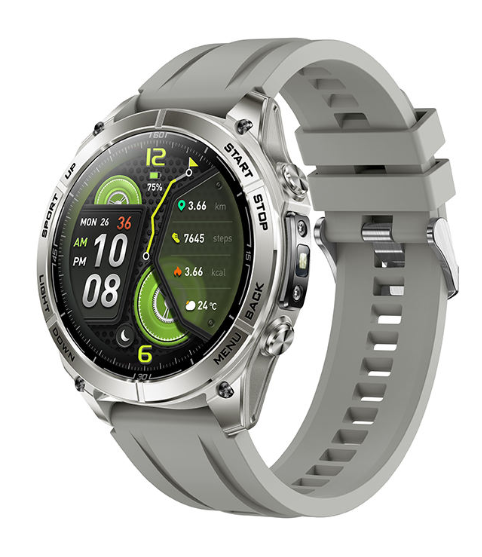
The Budget Smart Watch Market Has Changed
Not long ago, a sub-$100 smart watch meant compromised sensors, poor battery life, and a display that looked dated the moment it left the box. That's no longer the case. The past couple of years have seen a flood of affordable wearables that pack genuinely useful features into price points that used to buy little more than basic fitness bands.
The shift comes down to maturing supply chains and more efficient system-on-chip designs. Components that were once premium—AMOLED displays, GPS modules, optical heart rate sensors—have become commoditized. A 2025 budget watch from a competent manufacturer can deliver 80-90% of the functionality of a flagship device at a fraction of the cost. The challenge isn't finding a capable budget watch anymore. It's knowing which features actually matter and which ones are marketing fluff.
Heart Rate Monitoring That Actually Works
Optical heart rate monitoring is standard on virtually every smart watch above $30. But standard doesn't mean equal. The quality of the sensor, the placement of the LEDs, and the algorithm that processes the raw signal all vary significantly across brands and models.
What should a budget buyer look for? Consistency matters more than absolute accuracy. A watch that reads 2-3 BPM higher than a chest strap isn't a dealbreaker if it does so consistently. The trend data—how heart rate changes over time—remains useful even if the absolute numbers aren't perfectly calibrated. A 2025 study validating PPG-based heart rate sensors found that while accuracy varies across devices and activities, most modern sensors provide reliable enough data for everyday pattern tracking.
Look for watches that offer continuous monitoring rather than on-demand readings. On-demand requires the user to initiate a measurement, which introduces sampling bias—people tend to check when they're curious or concerned, not at random intervals. Continuous monitoring, on the other hand, captures data passively throughout the day and night, building a complete picture of heart rate patterns.
GPS: Built-In vs. Connected
This is one of the most consequential decisions when choosing a budget smart watch. Built-in GPS means the watch can track location and distance without a phone nearby. Connected GPS relies on the phone's GPS chip and transmits that data to the watch via Bluetooth.
For runners, cyclists, or hikers who want to leave the phone behind, built-in GPS is non-negotiable. The trade-off is battery life—GPS draws significant power, and budget watches with built-in GPS often see battery life drop from several days to several hours during active tracking. A recent budget watch release with dual-band GPS and a 460mAh battery promises up to 16 days of typical use, but GPS usage cuts that dramatically.
For gym-goers and urban walkers who always have a phone nearby, connected GPS is perfectly adequate. It saves money, preserves battery life, and delivers the same tracking accuracy because it's using the phone's superior GPS hardware. The key is understanding personal usage patterns before making a choice.
Display Quality That Doesn't Strain the Eyes
The display is the primary interface with the device, yet it's often overlooked in budget watch comparisons. Two specifications matter most: panel type and brightness.
AMOLED displays offer deeper blacks, better contrast, and more vibrant colors than LCD panels. They also consume less power when displaying dark interfaces, which extends battery life. Many budget watches now include AMOLED screens—the DM58 model, for example, features a 1.43-inch AMOLED display with 466×466 resolution. That level of clarity was unheard of at this price point just a few years ago.
Brightness is equally important, especially for outdoor use. A display that's unreadable in direct sunlight defeats the purpose of a watch meant to be glanced at throughout the day. Look for watches that specify peak brightness in nits—400 nits or higher is a reasonable benchmark for outdoor visibility.
Battery Life That Lasts Through the Week
Battery life remains the top complaint among smart watch users, regardless of price tier. A watch that needs daily charging quickly becomes a chore rather than a convenience. The sweet spot for a budget device is 5-7 days of typical use.
Several factors affect battery life: display type and brightness, GPS usage, continuous heart rate monitoring, and Bluetooth connectivity. Watches that prioritize battery life often use lower-power displays and more efficient chipsets. The ATS3085S chip, for instance, integrates 2D and 2.5D GPU acceleration with low-power operation, enabling smooth UI interactions without draining the battery. Chips like these are increasingly common in budget devices, which explains why battery life has improved so dramatically in recent years.
A useful rule of thumb: if a manufacturer quotes battery life in days rather than hours, and that number is at least 5, the watch is probably well-optimized. If the quoted life is 2-3 days, expect to be charging it frequently enough to find it annoying.
Water Resistance and Durability for Real-World Use
Water resistance ratings can be misleading. A watch labeled "waterproof" might only be splash-resistant. The industry standard uses ATM ratings: 3ATM means safe for rain and hand washing, 5ATM permits swimming in shallow water, and 10ATM or higher is suitable for snorkeling and other water sports.
For most users, 3ATM or 5ATM is sufficient. The more important consideration is build quality—how well the case seals against dust and moisture, and whether the materials hold up to daily wear. Budget watches with aluminum alloy cases and silicone straps tend to strike a good balance between durability and cost.
A Quick Reference Table
| Feature | Must-Have | Nice-to-Have | Skip If |
|---|---|---|---|
| Continuous heart rate | Yes | SpO2, ECG | On-demand only |
| GPS | Depends on use | Dual-band | None at all |
| AMOLED display | Yes | Always-on | Low-brightness LCD |
| Battery (days) | 5+ | 7-10 | Under 3 |
| Water resistance | 3ATM | 5ATM+ | None rated |
| Notification support | Yes | Quick replies | None |
The Features That Don't Matter as Much
It's worth calling out a few features that get disproportionate attention in budget watch marketing. Blood oxygen monitoring sounds impressive but has limited practical utility for healthy individuals. The readings are often inconsistent, and the clinical significance of occasional dips is poorly understood outside of specific respiratory conditions.
ECG functionality requires regulatory approval and adds cost without delivering much benefit for most users. Stress tracking, menstrual cycle tracking, and sleep scores are algorithm-driven estimates that vary widely in usefulness. None of these are dealbreakers either way—they're just not worth paying a premium for in a budget device.
What truly matters is the core experience: a readable display, reliable heart rate tracking, decent battery life, and notifications that work. Everything else is window dressing.
For those navigating the crowded budget smart watch market, CNKARENM produces a range of affordable wearables that check the essential boxes—AMOLED displays, continuous heart rate monitoring, GPS options, and battery life that holds up through the week. The company's experience in high-volume manufacturing ensures that these features are delivered consistently across production runs, making their devices a practical choice for buyers who want functionality without the flagship price tag.
Table of Contents
- The Budget Smart Watch Market Has Changed
- Heart Rate Monitoring That Actually Works
- GPS: Built-In vs. Connected
- Display Quality That Doesn't Strain the Eyes
- Battery Life That Lasts Through the Week
- Water Resistance and Durability for Real-World Use
- A Quick Reference Table
- The Features That Don't Matter as Much


