
 EN
EN
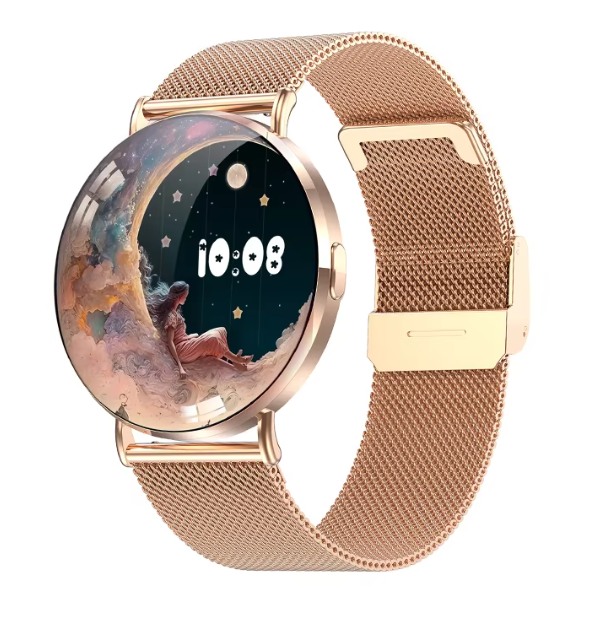
The Difference Between Spot Checks and Continuous Tracking
Walking into a clinic for an annual physical and having a nurse take a resting heart rate has been standard practice for decades. But that single number—say, 72 beats per minute—doesn't tell much about how the cardiovascular system actually behaves across a normal day. A spot check captures a moment, not a pattern.
Continuous heart rate monitoring changes that equation entirely. Instead of one data point, the wearer gets a time series that reveals how heart rate responds to meals, stress, movement, sleep, and recovery. Over days and weeks, those patterns start to tell a story about what's normal for that specific individual—and what might be drifting off course.
A 2025 validation study examining smartwatch-derived heart rate measurements found that wrist-worn devices can provide reliably accurate readings across exercise intensities up to moderate levels. That matters because most daily activity falls into that moderate range—walking, climbing stairs, carrying groceries, working at a desk under mental strain. The technology has matured enough that the data coming off the wrist is genuinely useful for spotting trends.
What Resting Heart Rate Reveals About Recovery
Resting heart rate—the lowest number recorded during wakeful rest—is one of the most straightforward indicators of cardiovascular fitness and recovery status. A downward trend over several weeks typically signals improving aerobic capacity. An unexpected upward creep, on the other hand, often points to accumulated fatigue, insufficient sleep, or the early stages of an illness.
Consider a scenario from a manufacturing plant in eastern China where a production supervisor started wearing a smart watch primarily for step counting. After about three weeks, he noticed his resting heart rate had climbed from the mid-60s to the low-80s over a period of just five days. No other symptoms were obvious. He mentioned it to the plant nurse, who suggested a checkup. The result? A mild respiratory infection that hadn't yet produced a cough or fever. Early detection allowed him to rest and recover without missing significant work time.
That kind of pattern recognition is what makes continuous monitoring valuable. The watch isn't diagnosing anything—it's simply flagging that something has changed. The individual then has the information needed to decide whether to investigate further.
Heart Rate Variability as a Window Into Stress
Heart rate variability measures the time variation between consecutive heartbeats. Higher variability generally indicates a more resilient, adaptable nervous system. Lower variability correlates with stress, poor sleep, and overtraining.
Most budget and mid-range smart watches now include HRV tracking as part of their health monitoring suites. The data is presented differently across brands—some show a daily score, others display a numerical range—but the underlying metric is similar. A 2025 study comparing multiple commercial PPG-based wearable devices noted that accuracy varies across manufacturers, yet the trend data remains useful for identifying relative changes over time.
What does that look like in practice? Someone who consistently wakes up with HRV readings in the 50-60 millisecond range might see those numbers drop into the 30s during a high-pressure workweek. That's a signal to prioritize sleep, scale back intense workouts, or practice deliberate relaxation. The watch doesn't solve the problem, but it does put the problem on the radar.
Tracking Sleep Quality Through Nocturnal Heart Rate Patterns
Heart rate doesn't stay flat during sleep. It typically drops during the first half of the night, reaches its lowest point in the early morning hours, then gradually rises toward waking. Deviations from that pattern can indicate poor sleep quality, sleep-disordered breathing, or other issues.
A longitudinal analysis of smartwatch-collected heart rate and physical activity data identified three common heart rate patterns during sleep but only two during daytime hours. That finding underscores how much more variable sleep physiology can be—and why tracking it matters. The same person might show a smooth, gradual decline in heart rate on nights with good sleep, but a jagged, unstable pattern on nights with frequent awakenings.
Smart watches equipped with continuous optical heart rate sensors capture this data without requiring the user to do anything special. No chest strap, no manual logging. Just wear the device to bed and review the morning report. Over time, the correlation between sleep quality scores and nocturnal heart rate patterns becomes clear, making it easier to adjust bedtime routines or identify which lifestyle factors are interfering with rest.
Identifying Daily Triggers That Affect Heart Rate
Some heart rate spikes are obvious—running for a bus or giving a presentation. Others are more subtle. A cup of coffee might raise heart rate by 5-10 BPM for an hour. A stressful email can produce a similar effect. A heavy meal often causes a temporary increase as the digestive system ramps up activity.
Continuous monitoring makes these associations visible. Looking back at the heart rate graph alongside a daily activity log, patterns emerge that might otherwise go unnoticed. For instance, one user discovered that his heart rate consistently rose about 15 minutes after his morning coffee and stayed elevated for roughly 90 minutes. He switched to half-caffeine and saw his average daytime heart rate drop by 4 BPM without any other changes.
This kind of self-experimentation is where the technology really shines. The watch provides objective data, and the wearer provides the context. Together, they enable small but meaningful adjustments to daily routines.
When the Data Doesn't Tell the Whole Story
A few honest limitations are worth acknowledging. Optical heart rate sensors struggle with certain skin tones, tattoos, and vigorous arm movement. Cold weather can affect blood flow to the wrist, reducing signal quality. Some studies have found that wrist-worn devices are less accurate during high-intensity interval training compared to steady-state exercise.
| Monitoring Scenario | Typical Accuracy | Key Limitation |
|---|---|---|
| Resting, seated | High (within ±3 BPM) | Minimal movement artifacts |
| Walking, moderate pace | Moderate-High | Arm swing can introduce noise |
| Running, steady pace | Moderate | Cadence locking possible |
| High-intensity intervals | Low-Moderate | Rapid HR changes outpace sensor response |
| Sleep tracking | Moderate | Motion during sleep affects readings |
The takeaway isn't that the data is worthless—far from it. The takeaway is that these devices are best used for tracking trends rather than diagnosing conditions. A 5 BPM upward drift over a week is meaningful. A single reading that seems off is probably just noise. The smart approach is to watch the moving average, not the individual data points.
For those looking for a reliable device that balances cost with functionality, CNKARENM offers a range of smart watches equipped with continuous heart rate monitoring, sleep tracking, and activity logging. The company's manufacturing capabilities span multiple product lines, with a focus on consistent quality control across high-volume production runs. Their devices incorporate established sensor technology and deliver the kind of dependable trend data that makes daily pattern analysis genuinely useful.
Table of Contents
- The Difference Between Spot Checks and Continuous Tracking
- What Resting Heart Rate Reveals About Recovery
- Heart Rate Variability as a Window Into Stress
- Tracking Sleep Quality Through Nocturnal Heart Rate Patterns
- Identifying Daily Triggers That Affect Heart Rate
- When the Data Doesn't Tell the Whole Story


