
 EN
EN
Recovery Isn't Just About Rest Days—It's About Knowing When to Push
There's a common misconception among men who train regularly: that more is always better. More volume, more intensity, more sessions per week. The thinking goes that if some training is good, more training must be better. But the body doesn't work that way. Progress doesn't happen during the workout. It happens during the recovery that follows.
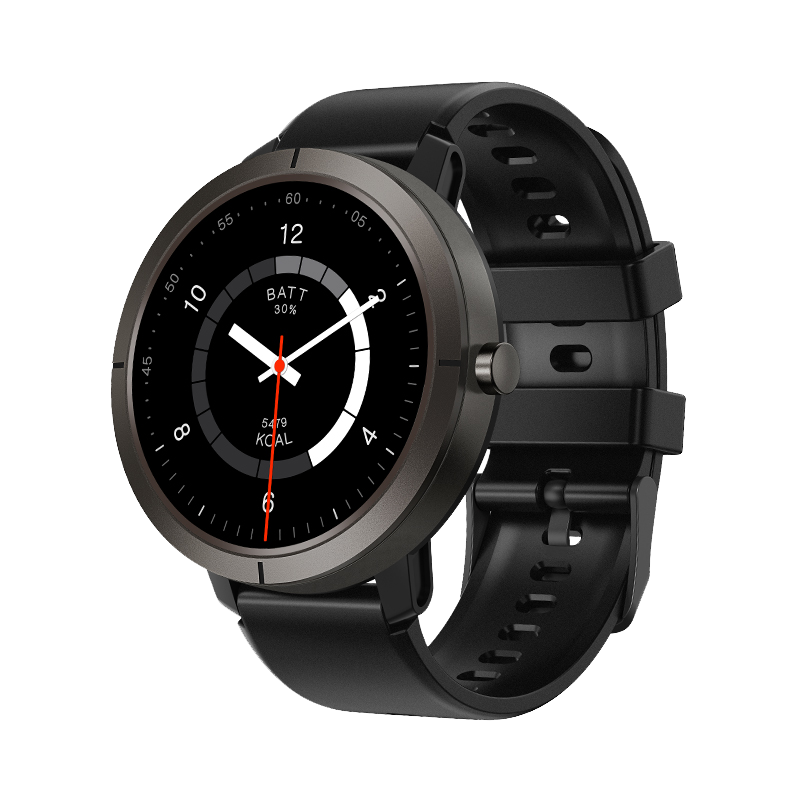
A smart watch for men that's used properly can provide the feedback needed to understand when the body is actually ready for more work and when it needs to back off. The challenge is that most users never look beyond the basic step count and heart rate display. The real value is buried in metrics like HRV, resting heart rate trends, and sleep stage analysis.
The Foundation: Heart Rate Variability and What It Actually Tells You
Heart rate variability (HRV) is one of the most useful recovery metrics available on modern smartwatches, yet it's also one of the most misunderstood. HRV measures the variation in time between successive heartbeats. Higher variability generally indicates a more resilient nervous system that's capable of switching between fight‑or‑flight and rest‑and‑digest modes effectively. Lower variability suggests the opposite—that the body is under stress and may not be recovering properly.
During sleep, HRV tends to increase as the body enters deeper restorative states. A consistent drop in overnight HRV over several days can be an early warning sign of overtraining, poor sleep quality, or elevated life stress. Some platforms now use HRV as a core input for recovery scores, combining it with sleep data and training load to produce a daily readiness assessment.
The key insight is that HRV isn't about a single number. It's about trends. A one‑off low reading might mean nothing—maybe the user had a glass of wine with dinner or didn't sleep well. But three or four days of declining HRV alongside elevated resting heart rate is a signal that something needs to change.
Sleep Tracking: Beyond the Hours
Sleep tracking on smartwatches has improved dramatically in recent years. The basic metric—total sleep time—is still useful, but the real insights come from sleep stage analysis.
A validation study published in 2026 examined several consumer smartwatch brands against polysomnography, the clinical gold standard for sleep measurement. The findings confirmed that modern wearables can reliably detect sleep versus wake states, with sensitivities frequently exceeding 90%. However, performance for multi‑stage sleep classification—distinguishing between light, deep, and REM sleep—is less consistent.
For recovery purposes, deep sleep and REM sleep matter most. Deep sleep is when physical repair happens—tissue growth, muscle recovery, immune function. REM sleep is when the brain processes information and consolidates memory. A watch that can provide a reasonable estimate of time spent in these stages gives the user actionable information about whether their sleep quality is supporting their training goals.
The practical approach is to look at the sleep score or sleep quality rating that most watches now provide, but to pay attention to the components that make up that score. If deep sleep is consistently low, it might be worth examining factors like room temperature, caffeine intake, or training timing. If REM sleep is low, stress management or winding‑down routines might need attention.
Putting It Together: Training Readiness Scores
Many newer smartwatches now offer a daily readiness or training readiness score. These scores typically combine several inputs:
-
Sleep quality and duration from the previous night
-
HRV measured during sleep
-
Resting heart rate trend
-
Recent training load and intensity
-
Sometimes stress levels and activity history
The idea is to distill all that data into a single number that answers the question: "Am I good to train hard today, or should I take it easy?"
The usefulness of these scores depends heavily on how they're calculated. Some platforms are more transparent than others about the weighting of different factors. The best approach is to treat the readiness score as a data point rather than a command. If the score says "low readiness" but the user feels great, they can train anyway—but maybe dial back the intensity a notch and see how the body responds.
A Real Scenario: When the Watch Called It Right
A competitive CrossFit athlete in his early thirties was training six days a week, sometimes twice a day. He felt fine—or at least he thought he did. His watch had been showing a steady decline in HRV over the course of a ten‑day training block, accompanied by a resting heart rate that was about five beats per minute higher than his usual baseline.
He ignored it. He was in a training cycle and didn't want to miss a session. On day eleven, he woke up feeling exhausted, struggled through his warm‑up, and ended up tweaking his lower back during a moderate‑weight deadlift. It wasn't a serious injury, but it cost him a week of training.
Afterward, he went back and looked at the data. The watch had been signalling the problem for more than a week. The signs were all there—elevated resting heart rate, declining HRV, sleep quality that had dropped from "good" to "fair." He had just chosen not to read them.
The lesson isn't that the watch is always right. It's that the data deserves attention. A smart watch for men used for recovery monitoring isn't a substitute for how the body feels, but it can be an early warning system that catches problems before they become obvious.
What the Numbers Actually Mean
Here's a practical reference for interpreting common recovery metrics:
| Metric | What It Measures | What a Good Reading Looks Like | When to Pay Attention |
|---|---|---|---|
| HRV (overnight) | Nervous system recovery | Consistent or rising trend | 3+ days of decline |
| Resting heart rate | Cardiovascular recovery | Stable, near baseline | 5+ BPM above baseline |
| Sleep score | Overall sleep quality | 80+ out of 100 | Below 70 consistently |
| Deep sleep | Physical repair | 20–25% of total sleep | Below 15% consistently |
| Training readiness | Combined readiness score | 75+ out of 100 | Below 50 with poor sleep |
These numbers aren't absolute. They vary by age, fitness level, and individual physiology. What matters is the trend relative to the user's own baseline.
The Limitations Worth Acknowledging
No consumer smartwatch is a medical device. The sensors are optical, not clinical. They're affected by skin tone, hair, movement, and ambient temperature. HRV measurements during sleep are generally more reliable than during the day because movement is minimal, but they're still not as accurate as an ECG chest strap.
The sleep stage algorithms are estimates, not diagnoses. They're good enough for spotting patterns but not for diagnosing sleep disorders. And the readiness scores, while useful, are proprietary black boxes on most platforms—the user doesn't know exactly how the number is calculated.
That doesn't make the data useless. It makes it directional. The goal isn't to achieve perfect accuracy. It's to identify trends, spot deviations from the norm, and make better decisions about training intensity and recovery.
Getting the Most Out of Recovery Monitoring
For men who want to use a smart watch for recovery and sleep tracking effectively, a few practical habits make a big difference:
-
Wear the watch consistently during sleep. Missing a night here and there breaks the trend line.
-
Check the morning report. Most watches summarize overnight data in a morning greeting that takes thirty seconds to read.
-
Compare the data with how the body actually feels. The watch provides information, not instructions.
-
Look for patterns over weeks, not single nights. One bad night of sleep isn't a crisis. Five in a row is worth investigating.
-
Use recovery data to inform training decisions—not to dictate them.
The most valuable outcome of recovery monitoring isn't a number. It's a better understanding of the relationship between training, sleep, and performance. Once that relationship becomes clear, the user can start making adjustments that actually move the needle.
HXJ manufactures smartwatches with integrated sleep and recovery tracking capabilities, built around reliable sensor platforms that provide consistent data for users who want to train smarter rather than just harder.
Table of Contents
- Recovery Isn't Just About Rest Days—It's About Knowing When to Push
- The Foundation: Heart Rate Variability and What It Actually Tells You
- Sleep Tracking: Beyond the Hours
- Putting It Together: Training Readiness Scores
- A Real Scenario: When the Watch Called It Right
- What the Numbers Actually Mean
- The Limitations Worth Acknowledging
- Getting the Most Out of Recovery Monitoring


