
 EN
A phone in the pocket is not a training partner
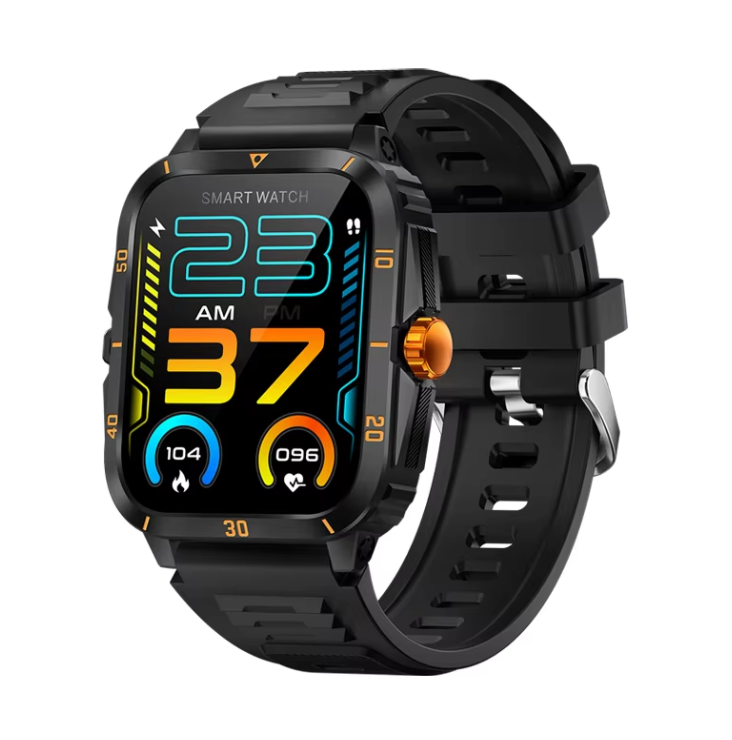
Outdoor training has a way of exposing weak data. A phone can log a route, but it sits in a pocket or armband, and its antenna has to fight fabric, body shadow, and hand coverage. A sports smart watch with GPS puts the receiver on the wrist, facing the sky more consistently, and pairs it with motion sensors that fill gaps between satellite fixes. That difference matters on trails, open water swims, and interval sessions where pace changes fast. The U.S. government's civil GPS information service notes that horizontal accuracy is typically around 3 meters in open sky, but that number assumes a clean view of satellites. Trees, cliffs, and tall buildings break that assumption quickly. A wrist device does not magically fix physics, but it does give the receiver a better starting point and a tighter feedback loop.
The route gets ugly before the data gets interesting
Most training routes look fine on a map until they do not. A wooded singletrack, a canyon descent, or a downtown brick canyon can turn a clean line into a scribble. This is where a dedicated sports smart watch earns trust. It can combine GNSS fixes with accelerometer and gyroscope data, so short dropouts do not become wild spikes. It can also use barometric altitude to smooth elevation gain, which GPS alone struggles with. Runners who train by effort and pace notice when a watch reports a 4:30 split on a climb that felt like 5:10. That kind of error is not just annoying. It corrupts training load estimates and race pacing plans.
Satellite systems and sensor fusion behind a reliable track
A modern outdoor watch rarely relies on one constellation. GPS, GLONASS, Galileo, and BeiDou can be used together, and multi-band receivers can pick up L1 and L5 signals. L5 is less affected by ionospheric delay and multipath, which helps in dense environments. The catch is power. More constellations and more bands mean more drain, so firmware has to decide when to use them. A well-tuned sports smart watch may switch to a lower-power mode on open road runs and a high-accuracy mode on technical trails. Sensor fusion is the other half. When satellite signals fade, the accelerometer tracks stride, the gyroscope tracks orientation, and the barometer tracks elevation. None of these sensors is perfect alone, but together they keep the track plausible.
| Scenario | Phone GPS in pocket | Basic GPS watch | Multi-band GPS sports watch |
|---|---|---|---|
| Open sky road run | Good, may drift with body shadow | Good | Excellent |
| Dense forest trail | Poor, frequent spikes | Fair | Good |
| Urban canyon | Poor, multipath errors | Fair | Good |
| Elevation gain | Weak, noisy | Fair with barometer | Good with barometer and fusion |
| Battery impact | Shared with phone | Moderate | Higher in high-accuracy mode |
Battery and antenna design choices that affect training data
A GPS receiver is only as good as the antenna it feeds. On a wrist device, the antenna has to share space with a display, battery, heart rate sensor, and sometimes a speaker. A metal case can look great and still detune the antenna if the ground plane is poorly planned. That is why industrial design and RF layout have to be developed together, not sequentially. During a wearable design review in Shenzhen, a team found that moving a metal bezel 2 mm closer to the antenna ground plane pushed cold-start time from about 28 seconds to nearly 50 seconds in a controlled test. That kind of finding usually forces a layout change before tooling. Battery life is the other constraint. High-accuracy GNSS modes can cut runtime sharply, so a watch that claims 20 hours in smartwatch mode may drop to 8 or 10 hours in full GNSS mode. Athletes who train for long distances need to read the fine print. A common mistake is buying on standby days and then discovering the real GPS runtime on a four-hour hike.
What outdoor athletes should check before buying
The spec sheet is a starting point, not a verdict. Several practical checks matter more than a long feature list. First, look at the GNSS support list and whether multi-band is included. Second, check the battery rating in the GPS mode that matches actual training, not the smartwatch mode. Third, confirm that the watch supports route upload and breadcrumb navigation if off-grid training is common. Fourth, check water resistance ratings against the activity, since open water swimming and rainy trail runs are different stress cases. Fifth, look at how the watch handles auto-pause and lap alerts, because a GPS track is only useful if the interface makes it easy to act on. A sports smart watch that fits training habits beats one that wins on paper.
Where GPS still struggles and how to plan around it
GPS is not magic. It struggles under heavy canopy, in slot canyons, and around reflective glass towers. It can also lag during sharp direction changes, which is why crit-style cycling and obstacle runs may show small errors. Cold temperatures reduce battery capacity, and wet conditions can attenuate signals. Honest planning helps. Start the GPS lock before moving, keep the watch exposed to the sky, and carry a backup route map for remote areas. For athletes who mostly train indoors, a GPS watch may be overkill. For anyone who regularly runs, rides, or hikes outdoors, the data quality difference is usually worth the cost.
For brands building outdoor training products, Karen M offers Shenzhen-based manufacturing experience, quality control discipline, and supply chain support that help turn a GPS sports watch concept into a reliable product.
Table of Contents
- A phone in the pocket is not a training partner
- The route gets ugly before the data gets interesting
- Satellite systems and sensor fusion behind a reliable track
- Battery and antenna design choices that affect training data
- What outdoor athletes should check before buying
- Where GPS still struggles and how to plan around it


