
 EN
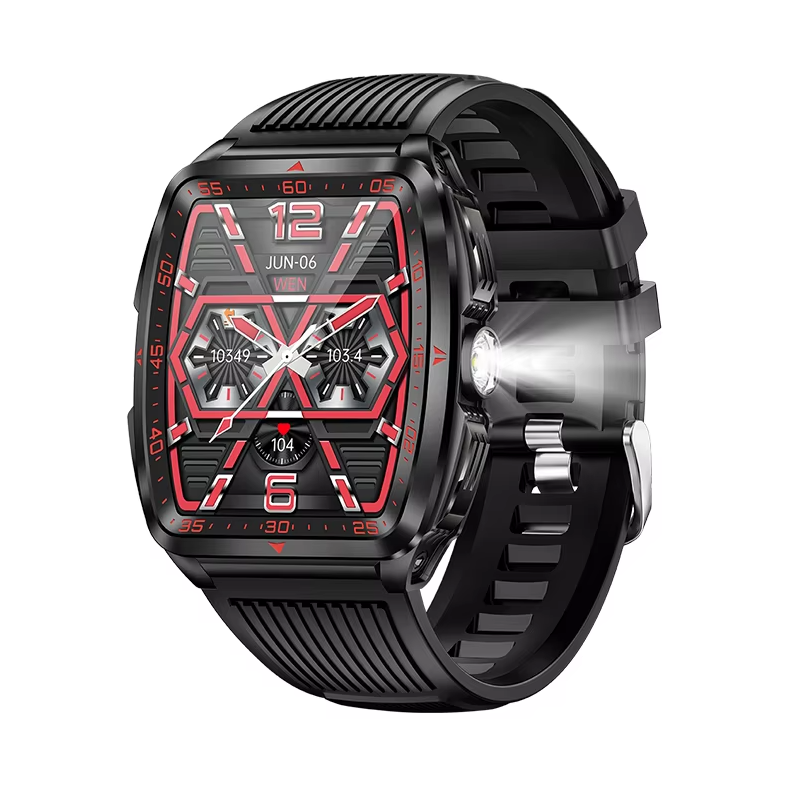
Classic proportions that the eye already trusts
A round smart watch borrows from a design language that predates smartwatches by centuries. Circular cases, balanced lugs, and clean dials show up in dress watches, field watches, and jewelry. That familiarity is not nostalgia. It is a visual shortcut. The eye reads a circle as a finished object, while a rectangle often reads as a screen first and a watch second. Buyers who care about style notice this immediately. A circular case can sit next to a bracelet or a cuff without looking like a gadget. The same cannot be said for every rectangular design. Classic watch conventions, such as a case diameter roughly between 36 and 42 mm for many adult wrists, give designers a proven starting point. IDC's Worldwide Quarterly Wearable Device Tracker has repeatedly shown that design and fashion are key purchase drivers in the smartwatch category. A round smart watch can lean on those proportions instead of inventing a new silhouette from scratch.
Wrist size changes the fit, not the formula
Wrist circumference varies widely, and a case that looks elegant on a 170 mm wrist can look oversized on a 145 mm wrist. Round geometry handles that spread better than most rectangles. A circle has no hard corners to overhang the wrist edge, and its visual mass is centered. A 40 mm round case on a smaller wrist reads as a watch, while a 40 mm square case can read as a small tablet. On a larger wrist, a 44 mm round case still looks proportionate because the bezel absorbs some of the visual weight. The practical rule is not one size fits all. It is that a circular case gives more people a workable fit within a narrower range of diameters. That reduces SKU complexity for brands and decision fatigue for buyers.
Lugs, casebacks, and bezels decide comfort
The case diameter gets the attention, but the lugs and caseback decide whether a watch actually sits well. Straight lugs can dig into a smaller wrist, while curved lugs follow the wrist curve and distribute pressure. A thick caseback pushes the watch up and makes it feel top-heavy. A domed caseback can hug the wrist without adding visual bulk. Bezel design matters too. A thin bezel makes the dial look larger, which can overwhelm a small wrist. A slightly wider bezel can make the same case feel more balanced. During a pilot build for a European accessory brand, the team found that a 40 mm round case with straight lugs created pressure points on wrists below 155 mm, while a 42 mm case with curved lugs and a slimmer caseback sat better. The fix was not a smaller case. It was a revised lug angle and a thinner back.
The display tradeoff that buyers should understand
A circular display is not the most efficient rectangle. Compared with a square of the same width and height, a circle exposes about 78.5 percent of the active area. That missing corner space affects long messages, maps, and dense lists. The tradeoff is real, and good design does not hide it. Circular interfaces, short text cards, and complication-style widgets make the shape feel intentional. Buyers who mostly read notifications and track daily activity rarely notice the difference. Buyers who spend time reading long emails or reviewing maps may prefer a rectangular screen. The point is not that one shape wins. It is that the round smart watch earns its place when the interface respects the geometry instead of fighting it.
| Design factor | Round smart watch | Rectangular smartwatch | Why it matters for wrist fit |
|---|---|---|---|
| Visual overhang on small wrists | Low, no hard corners | Higher, corners can extend past wrist edge | Smaller wrists look cleaner |
| Perceived size on large wrists | Balanced, bezel absorbs mass | Can look narrow or phone-like | Proportion stays consistent |
| Active display area against same bounding box | About 78.5 percent | 100 percent reference | Dense text needs tighter UI |
| Lug and strap compatibility | Standard lugs work well | Often needs specific strap shapes | Easier to swap bands |
| Classic aesthetic match | Strong, close to dress watch language | Sporty or tech-first | Outfit flexibility improves daily wear |
Where circular design still asks for compromise
A round case is not a universal answer. Users who need long-form reading, detailed maps, or dense workout dashboards may find a rectangle more practical. A circular display can also be more exposed to edge impacts, so case protection needs thought. Battery volume is another constraint, and thin round cases leave less room for cells and antennas. Those limitations are worth stating plainly. The better question is who benefits most. For buyers who want a watch that works with a wardrobe, a round smart watch often reduces daily friction because it looks like a watch first. For athletes and field workers who need maximum screen real estate, a rectangular design may still be the better tool.
Matching the case to the wrist before matching the spec sheet
Buyers often start with features and end with fit. A better sequence is to start with wrist circumference, then case diameter, then lug shape, then display needs. A simple measuring tape around the wrist gives a useful number. As a rough guide, wrists under 155 mm often suit 36 to 40 mm cases, wrists between 155 and 175 mm can handle 40 to 42 mm, and larger wrists can carry 42 to 46 mm. These are starting points, not rules. Curved lugs and a slim caseback can make a larger case wearable, while a thick case can make a smaller case feel clumsy. For brands building round-case wearable lines, Karen M brings Shenzhen-based manufacturing experience, quality control discipline, and supply chain depth that help turn a classic aesthetic into a producible product.


