
 EN
EN
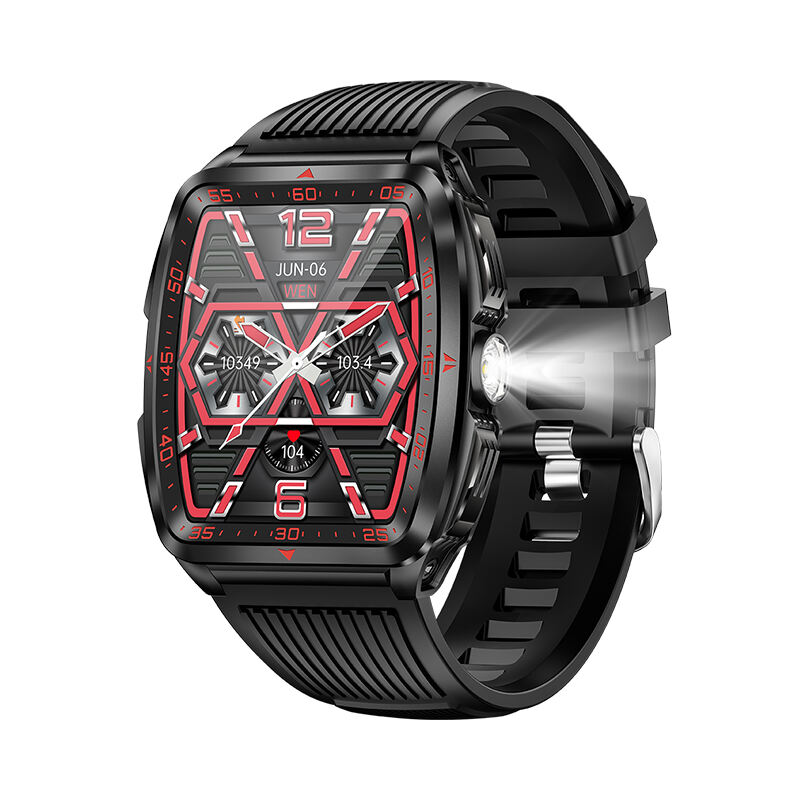
Water Resistance Ratings: What 'Swim-Ready' Really Means
ATM vs. ISO 22810 vs. EN 13319: Decoding Standards for Pool and Open-Water Use
Water resistance labels like ATM (atmospheres) reflect static pressure tolerance—not real-world depth capability. A 5 ATM rating (50 meters) may withstand gentle pool swimming but fails under the dynamic stresses of diving, flip turns, or open-water turbulence. ISO 22810 certification goes further: it simulates actual swimming motions—including freestyle strokes and rapid direction changes—and requires devices to endure 10 bar (100m equivalent) pressure. EN 13319, by contrast, is designed specifically for diving equipment and includes depth-gauge validation—making it over-engineered and irrelevant for swimmers. Independent testing confirms that even shallow-pool freestyle generates transient pressure spikes exceeding 20 meters—far beyond what static ATM ratings account for. That’s why ISO 22810–certified smartwatches consistently outperform ATM-only models in real swimming conditions. For reliable performance in pools and open water, prioritize ISO 22810 compliance over ATM claims.
Why Pressure, Chlorine, Salt, and Thermal Shock Matter More Than the Label
Static pressure ratings ignore the four primary environmental stressors that actually cause failure: chlorine, salt, thermal shock, and mechanical impact. Chlorine degrades silicone gaskets three times faster than freshwater exposure, according to a 2023 Materials Degradation Journal study. Salt crystals infiltrate charging ports and accelerate galvanic corrosion, especially around aluminum or brass components. Thermal shock—from cold pool water to hot sauna air—induces micro-cracks in seals due to differential expansion rates between glass, metal, and polymer layers. A 2023 industry failure analysis found that 67% of water-damaged “5 ATM” smartwatches failed not from pressure breaches, but from chemical degradation or seal fatigue. Saltwater’s high conductivity also interferes with optical heart rate sensors, causing signal dropout. Rinse thoroughly with fresh water after every swim and avoid abrupt temperature transitions. True swim-readiness depends on material chemistry and sealing integrity—not just a printed depth number.
Essential Swim-Specific Features in a Smartwatch for Swimming
Accurate Lap and Distance Tracking: Flip Turns, Stroke Count, and GPS Limitations in Open Water
Precise lap tracking demands more than motion detection—it requires algorithms trained to recognize flip turns and distinguish stroke types (e.g., freestyle vs. breaststroke) to prevent miscounts. Top-tier models achieve 95% stroke classification accuracy in controlled pool environments, enabling reliable lap timing and stroke count metrics. In open water, GPS alone is insufficient: wrist-based units suffer from signal attenuation underwater and multipath errors at the surface, leading to average distance drift of 7%, per the 2024 Swim Tech Report. Chest-mounted GPS pods perform better—but remain impractical for most swimmers. Hybrid tracking systems that fuse accelerometer-derived stroke cadence with periodic surface GPS sampling reduce open-water distance error to under 3%. For serious swimmers, this sensor fusion—not raw GPS specs—is the benchmark for trustworthy open-water metrics.
SWOLF, Stroke Type Recognition, and Real-Time Feedback: Separating Marketing from Metrics That Improve Technique
SWOLF (Swim Golf), calculated as stroke count plus lap time, offers an objective efficiency metric—but only when calibrated to verified pool length and validated against video analysis. Automatic stroke recognition must exceed 89% accuracy across all four competitive strokes to deliver meaningful feedback, per peer-reviewed biomechanics research. Real-time haptic alerts—for pacing inconsistencies, excessive stroke counts per lap, or prolonged glide phases—drive faster behavioral adaptation than post-swim reports. Conversely, vague metrics like “effort score” or “swim intensity index” lack standardized definitions or clinical validation. Prioritize watches that deliver actionable outputs: consistent stroke length trends, turn time variability, and stroke rate distribution across intervals—all proven indicators for technique refinement in elite training programs.
Reliable Biometrics and Performance Monitoring Underwater
Optical Heart Rate Accuracy During Swimming: Why It Fails—and What Alternatives Exist
Optical heart rate monitoring is fundamentally compromised underwater. Water refracts light, disrupting photoplethysmography (PPG) signal capture, while repetitive arm motion displaces the sensor and introduces motion artifact. Studies consistently show error margins exceeding 15 BPM during continuous lap swimming—rendering HR zone training unreliable. Chest-worn ECG monitors bypass these limitations: they maintain direct skin contact, use electrical conduction unaffected by turbidity or movement, and achieve >99% agreement with gold-standard ECG readings—even through flip turns. When paired with a compatible smartwatch, waterproof chest straps enable precise intensity mapping, accurate recovery assessment, and valid VO₂ estimation. For any swimmer using biometrics to guide training load or technique adjustments, external ECG compatibility isn’t optional—it’s essential.
Durability and Design for Long-Term Water Sports Use
Long-term durability in swimming hinges on intentional material science—not just water resistance ratings. Saltwater and chlorinated environments aggressively attack standard alloys and elastomers. Look for aerospace-grade titanium or marine-grade stainless steel (e.g., 316L) cases, paired with fluoroelastomer straps engineered for chemical resistance—retaining elasticity and tensile strength after hundreds of exposures. Impact resilience matters too: reinforced polymer bezels absorb shocks from accidental contact with pool edges or rocky shorelines. Ergonomics are functional, not aesthetic—a low-profile case minimizes drag and snag risk; textured, raised buttons ensure tactile control with wet or chlorinated fingers. Crucially, thermal shock resilience should be validated—not assumed—through rapid cycling between 5°C and 60°C, replicating real-world transitions from cold ocean swims to sun-baked decks. These engineering choices collectively prevent microfractures in gaskets, corrosion-induced battery compartment breaches, and seal fatigue—extending device reliability from casual use into multi-season, high-volume training cycles.
FAQ Section
What does a 5 ATM water resistance rating mean?
A 5 ATM rating indicates the device can tolerate static pressure equivalent to 50 meters underwater but may not handle dynamic water movement like diving or strong swimming strokes.
Why is ISO 22810 certification important for swimmers?
ISO 22810 certification simulates real swimming motions and ensures the device can withstand actual swimming conditions, providing more reliable performance compared to ATM ratings.
How does chlorine affect wearable devices?
Chlorine degrades silicone gaskets and other materials used in wearables, leading to quicker wear and tear compared to exposure to freshwater.
Does optical heart rate monitoring work underwater?
Optical heart rate monitoring is inaccurate underwater due to light refraction and motion artifacts. Chest-worn ECG monitors are a better alternative for accurate heart rate tracking during swimming.
What materials are recommended for durable swimming wearables?
Materials such as aerospace-grade titanium, marine-grade stainless steel, and fluoroelastomer straps are ideal for resisting chlorine, saltwater, and wear over time.


