
 EN
EN
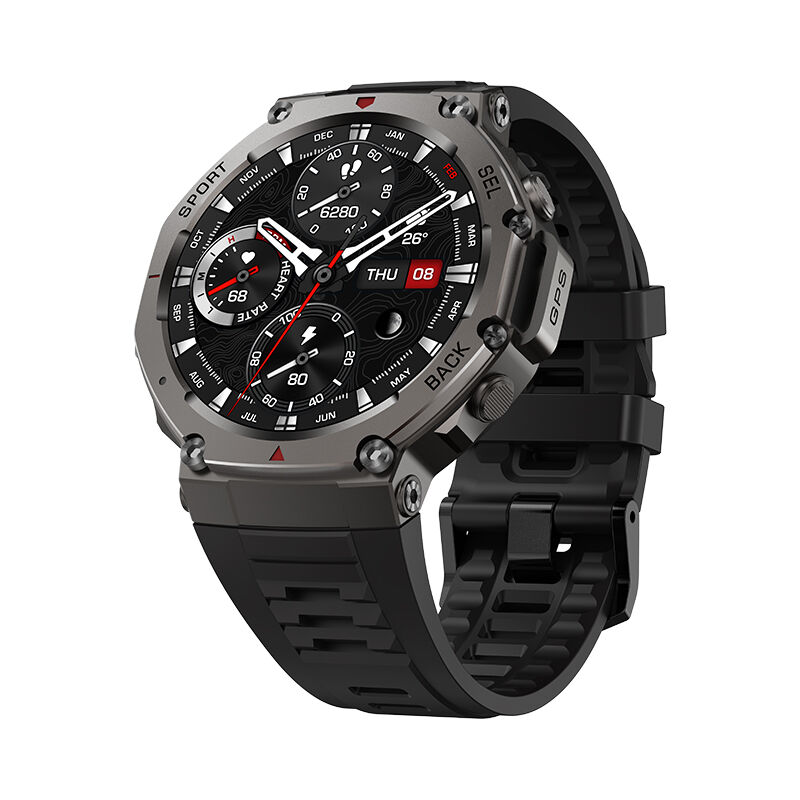
Why Long Battery Life Is Non-Negotiable for Frequent Travelers
For frequent travelers, a reliable smartwatch isn’t just a convenience—it’s a critical tool for navigating unfamiliar cities, tracking fitness routines, and staying connected without constantly reaching for your phone. Standard 1–2 day battery life becomes a liability during long flights, multi-day treks, or unpredictable access to power outlets. Imagine missing a gate change notification mid-layover—or losing navigation mid-hike in remote terrain. These aren’t hypotheticals: research shows travelers report three times more stress when critical devices fail on the road versus at home. A true long-battery smartwatch—lasting weeks on a single charge—eliminates that anxiety by ensuring continuous access to multi-timezone displays, offline maps, and emergency alerts. This endurance transforms travel from a series of logistical compromises into confident, uninterrupted exploration.
Technical Foundations of a True Long Battery Life Smartwatch
Battery capacity (450–500mAh) meets ultra-low-power chipsets (e.g., Ambiq Apollo4 Plus)
Genuine longevity begins with hardware synergy: high-capacity batteries (450–500mAh) paired with ultra-low-power chipsets like the Ambiq Apollo4 Plus. This combination reduces energy consumption by up to 90% compared to conventional processors—enabling 26+ days of continuous operation, even with all-day health monitoring. Larger batteries serve as deep power reservoirs, while advanced chipsets minimize idle drain through micro-ampere sleep states. Unlike mainstream smartwatches that require daily charging, this architecture delivers what frequent travelers actually need: dependable, multi-week functionality across time zones—no outlet hunting, no power bank bulk.
Dual-band GPS and ambient display optimization for all-day reliability without charging
Dual-frequency GPS (L1 + L5 bands) cuts location-acquisition time and improves signal resilience—while using 50% less power than single-band systems. Paired with transflective memory-in-pixel (MIP) ambient displays—which draw near-zero power in static mode—this setup preserves 40% more battery during navigation than standard OLED screens. The result? Always-visible maps and pace data without wake gestures or screen taps. Complementary optimizations include passive heart-rate sensing (reduced sampling frequency), context-aware brightness control, and scheduled Bluetooth sync windows. Together, they enable 18+ hours of daily navigation without charging—more than triple the endurance of typical fitness trackers.
Top 3 Long Battery Life Smartwatches Engineered for Global Travel
Garmin Enduro 3: 36-day battery life, dual-band GPS, and rugged travel durability
Built for expedition-grade reliability, the Enduro 3 delivers 36 days of battery life on a single 450mAh charge—ideal for month-long adventures where charging is scarce. Its dual-band GPS ensures precise, low-power navigation across deserts, mountains, and dense urban canyons. The titanium-reinforced chassis resists impact, corrosion, and extreme temperature swings—from tropical humidity to alpine cold—while its sunlight-optimized display remains legible without draining power.
Coros Vertix 2S: 45-day max runtime with solar charging and offline topo maps
The Vertix 2S leads the endurance category with up to 45 days of runtime—and photovoltaic charging that extends battery life by 35% under direct sunlight, validated in real-world Mojave Desert testing. Preloaded topographic maps function fully offline, supporting backcountry navigation without cellular dependency. Sapphire glass withstands abrasion from airport baggage handling, and its proprietary energy management system intelligently downshifts power use during transit phases—like long-haul flights or train journeys—preserving charge for when it matters most.
Suunto Race: 17-day GPS mode + smart travel features (multi-time-zone sync, auto-dimming)
Striking a balance between intelligence and endurance, the Suunto Race offers 17 days of continuous GPS tracking—sufficient for transcontinental trips without recharging. Its automatic multi-time-zone sync eliminates manual clock adjustments during layovers, while an ambient light sensor dynamically adjusts screen brightness across environments—from sun-drenched streets to dimmed aircraft cabins. Integrated hypoxia detection helps monitor altitude-related physiological stress during mountain travel—adding clinical-grade insight without compromising battery life.
FAQ
Why is long battery life essential for travelers?
Long battery life ensures that travelers can rely on their smartwatches during extended trips without needing frequent recharges. This eliminates stress caused by device failure during crucial moments like navigation or notifications.
What are the key technical features behind a long-battery smartwatch?
High-capacity batteries, ultra-low-power processors like the Ambiq Apollo4 Plus, dual-band GPS, and power-saving ambient displays are vital to achieving extended battery life.
Which smartwatch has the longest battery life?
The Coros Vertix 2S leads with up to 45 days of battery life thanks to its solar charging capabilities and energy-efficient design.
Can these smartwatches be used for rugged outdoor activities?
Yes, models like the Garmin Enduro 3 are specifically designed for rugged expeditions, offering features like dual-band GPS and durable titanium-reinforced chassis.
Are offline maps available on these smartwatches?
Yes, options like the Coros Vertix 2S provide offline topographic maps for backcountry navigation, even without cellular connectivity.


