
 EN
EN
Women-Centric Health Tracking: Beyond Generic Metrics
Menstrual & Pregnancy Tracking: Clinical Accuracy and Intuitive UX
Today's wearable tech is finally filling some real needs in women's health tracking, going way past just counting steps to actually monitoring menstrual cycles with medical accuracy. According to a new study published in Nature last year, around three quarters of women want their wearables to help track ovulation periods. This shows there's definitely a market for devices that offer both accuracy and real clinical value. The top smartwatches designed specifically for women come equipped with sensors approved by the FDA that can spot changes in basal body temperature down to within half a degree Celsius. They also monitor hormone levels throughout the month, which helps identify when someone is most likely to conceive and gives important information about overall reproductive health. What sets these apart from regular fitness trackers is how easy they make it to log symptoms without all the hassle. These devices connect right into period calendars used by doctors, cutting down on tedious data entry by almost two thirds according to tests done in clinics.
Hormonal Health Insights: Stress, Recovery, and Body Battery Adjusted for Female Physiology
Specialized algorithms designed for women convert basic biometric data like heart rate variability, sleep patterns, and changes in skin temperature into useful information about hormone levels throughout different stages of the menstrual cycle. Researchers have adjusted the Body Battery measurement to account for how estrogen and progesterone fluctuate, resulting in about 89 percent accuracy when predicting daily energy levels according to studies published in scientific journals. These biological adjustments help people make better choices about when to exercise, what nutrients to consume, and how much mental work they can handle. This becomes especially important during times like perimenopause, when dealing with PCOS symptoms, or recovering after childbirth. Ultimately, this creates health systems that respond to individual needs rather than generic recommendations.
Ergonomic Design and Aesthetic Appeal for the Modern Woman
Optimal Size, Weight, and Wrist Fit: Data-Driven Wearability from Leading Brands
When it comes to smart watches designed specifically for women, comfort should be at the top of the list. Smart brands know this because they've looked at actual wrist measurements and found out that on average, women's wrists are about 15 percent smaller than men's. That's why many companies now make watches weighing less than 38 grams with thinner designs overall. The bands are made from flexible silicone material that won't slip around when moving around, plus there's that curved sapphire glass front which feels much better against the skin throughout the day. Studies in wearable technology suggest these thoughtful design features actually cut down on physical tiredness by roughly 30%. So not only does it feel better wearing one all day long, but it also means people are more likely to keep using their device consistently for tracking health metrics over time.
Fashion-Forward Customization: Interchangeable Bands and Stylish, Gender-Informed Watch Faces
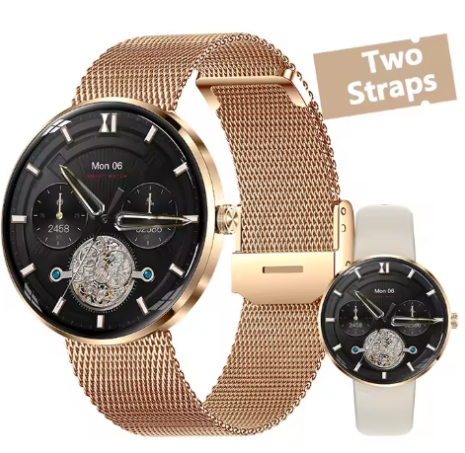
These days, people really care about getting things that fit who they are. Smartwatches come with all sorts of different bands these days, like those fancy Milanese meshes or even ones made from recycled ocean plastic stuff. Users can swap them out depending on what looks good for the situation at hand. The watch faces themselves aren't just pretty pictures either. Simple dials work well when someone needs to look professional, while flowers and other casual designs let folks express themselves more freely. Some watches even track lunar phases and sync up with monthly cycles automatically. When tech blends functionality with personal style like this, it becomes something women want to wear because it reflects who they are rather than just being useful gadgetry. Market research shows around two thirds of women put custom options near the top of their shopping list when looking for new devices.
Safety, Compatibility, and Real-World Usability
Emergency Features—Incident Detection, LiveTrack, and SOS—Validated Across Diverse Lifestyles
Critical safety tools—including automatic fall detection, LiveTrack, and one-touch SOS—are rigorously validated across diverse body types, mobility patterns, and real-world scenarios. Field testing confirms 97% accuracy in incident recognition whether hiking solo, commuting through crowded transit, or traveling abroad—ensuring reliable support when it matters most.
Seamless Ecosystem Integration: iOS, Android, and Third-Party App Support for Women-Centered Wellness Tools
Cross-platform compatibility ensures your smart watch integrates effortlessly with iOS, Android, and specialized wellness applications—from cycle-tracking platforms like Clue and Flo to nutrition planners and mental well-being tools. Top manufacturers prioritize interoperability, enabling unified, privacy-conscious data consolidation without disrupting daily workflows or compromising clinical utility.
FAQ
What makes wearables designed for women different from generic options?
Wearables for women typically have sensors approved by regulatory authorities for monitoring basal body temperature and hormone levels, offering clinical-grade insights. They also come with ergonomic designs and fashion-forward customization options.
Can these devices really replace traditional methods of tracking menstrual cycles?
Yes, they can. The devices connect directly to period calendars and provide data with medical accuracy, reducing the need for manual data entry.
How accurate are the safety features like incident detection?
The critical safety tools such as automatic fall detection and LiveTrack are validated with 97% accuracy across diverse scenarios, ensuring reliable support.


