
 EN
EN
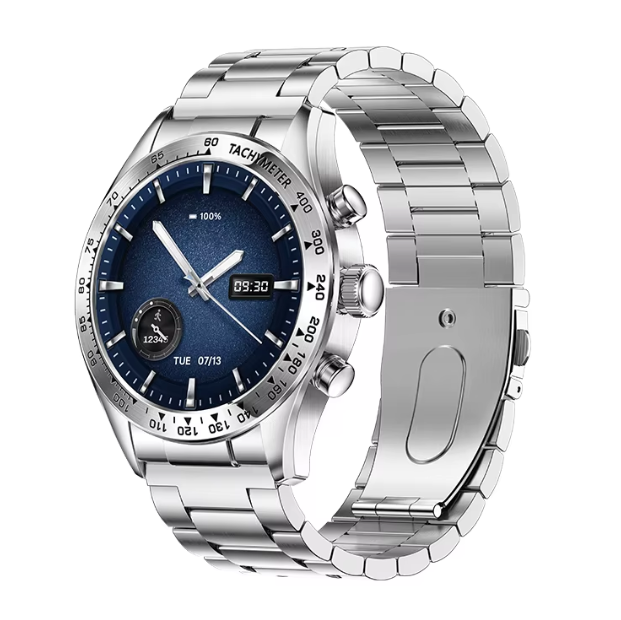
Physiological and Behavioral Foundations: Why a Smartwatch for Men Needs Purpose-Built Design
Key biological and lifestyle differentiators: heart rate variability baselines, sleep architecture, and activity intensity patterns
Men show different body signals that need special attention when it comes to tracking their health. Their average heart rate variability tends to be about 10 to 15 percent lower compared to women's levels, which means the software needs to be set differently to spot when someone is getting stressed too soon. When we look at sleep patterns, there's another gap. Men generally get around 15% less of that really good deep sleep stage and wake up more during the night. These interruptions often happen because of spikes in stress hormones called cortisol. The way guys typically move throughout the day is pretty different too. They tend to do short bursts of intense activity such as lifting weights or sprinting, so the devices used for monitoring need quick reaction times and better ways to filter out movement noise. If manufacturers ignore all these differences, they risk giving people wrong information about their health status. That's why designing equipment specifically for male physiology isn't just nice to have anymore; it's actually necessary for accurate readings.
How male-dominant use cases—field work, endurance training, and multitasking commutes—shape hardware and software priorities
What men actually do with their devices shapes how engineers make compromises in product design. Workers out on construction sites demand gear that can withstand drops and water damage according to military standards (MIL-STD-810H) and IP68 ratings so they last through harsh conditions. Long distance runners want something different entirely batteries that last days, not hours, plus features like tracking stride patterns and measuring changes in elevation instead of just counting steps. City dwellers stuck in traffic or waiting at train stations appreciate smartwatches that respond quickly to voice commands while keeping important updates visible through subtle vibrations rather than flashing lights. All these needs mean manufacturers focus more on building robust components than creating flashy displays. They invest in durable antenna systems rather than thin frames, and develop artificial intelligence that understands when someone moves from riding a bike to catching public transport without needing buttons pressed all the time.
Essential Health & Fitness Sensors for Men's Long-Term Wellness
ECG, HRV, SpO2, and skin temperature: clinical relevance for cardiovascular risk and hormonal health monitoring
Men's smartwatches now come equipped with sensors that have been tested and approved by medical experts to tackle health issues specific to males. The FDA approved ECG feature can spot atrial fibrillation, which often shows up sooner and hits harder in guys than anyone else. Heart rate variability tracking gives real insights about how balanced our bodies are when it comes to stress levels. This actually works as an early warning system for things like constant stress, pushing too hard at workouts, or being stuck in fight-or-flight mode all day long. SpO2 monitoring catches those hidden drops in oxygen levels during sleep apnea events something affecting around 30 percent of men past forty years old and also during intense activity at high altitudes. Tracking skin temperature continuously lets us see changes in metabolism patterns and daily rhythms, stuff that directly affects testosterone production and recovery times after workouts. All these features combined help prevent heart problems before they start getting serious. Men really need this because statistics from the CDC show we're 50% more likely to die from heart disease compared to women.
Advanced sleep staging + recovery scoring: detecting cortisol-driven fragmentation and its impact on testosterone resilience
New sleep tracking tech is starting to understand what makes men's sleep different from women's. It looks at more than just how long someone sleeps, but also how well that sleep actually functions for the body. Sleep algorithms developed specifically for men's bodies can spot when stress hormones cause fragmented sleep patterns, like waking up three times or more during the night. This kind of disrupted sleep messes with the testosterone boost that happens naturally during certain stages of sleep, which our muscles need to recover and our brains need to stay sharp. According to last year's Men's Health Tech Study, guys who managed to raise their sleep recovery scores by about 20 points typically saw their free testosterone levels go up around 18% after just eight weeks of better sleep habits. The way these systems track sleep quality connects directly to things we care about the next day, like heart rate variability, how much energy we feel, and whether we're ready for our workouts. What this means practically is that men can tweak their training schedules, time when they eat after working out, and develop better bedtime routines based on real data instead of guesswork.
Rugged Performance and Outdoor Readiness: Durability as a Core Feature for Men's Smartwatch Use
When guys work in tough jobs or spend time outdoors, durable gear isn't something they want - it's something they need. These folks face constant hits from dust, dirt, water, and extreme temperatures wherever they go whether that's at construction sites, hiking mountains, or out on boats. Regular consumer gadgets just don't cut it in these situations because they break down exactly when someone needs them most. The best rugged devices pass MIL-STD-810H tests for handling shocks and vibrations, can survive falls from 1.5 meters onto concrete floors, and stay waterproof up to 100 meters deep. They also feature aerospace quality titanium bodies and either sapphire glass or the latest Gorilla Glass Victus 2 screens that hold up against scratches and heavy pressure. Many models now come with solar charging options too, plus they work reliably in temperatures ranging from -20 degrees Celsius all the way up to 60 degrees. According to recent market research by IDC in their 2023 Wearables Survey, around two thirds of male professionals actually put device toughness ahead of how good something looks. After all, when equipment fails during critical moments, it doesn't just look bad it puts people's safety at risk and disrupts important operations.
All-Day Usability: Battery Life, Display, and Cross-Platform Compatibility for Professional Men
For professional men, uninterrupted functionality across complex, mobile schedules is non-negotiable. Extended battery endurance isn’t convenience—it’s continuity. Per the IDC 2023 Wearables Survey, 68% of full-time professionals prioritize 7+ day battery life over daily-charging models, eliminating power anxiety during international travel, back-to-back client meetings, or multi-day field deployments.
7+ day battery vs. daily charging: adoption drivers among full-time professionals (IDC 2023 Wearables Survey insights)
Three drivers dominate adoption decisions:
- Productivity preservation: 72% cited avoiding midday charging breaks as essential for workflow continuity
- Travel readiness: 65% favored week-long battery life for international trips where outlet access is inconsistent
- Emergency reliability: 58% valued reserve power for critical communications during extended workdays or unexpected delays
Sunlight-readable displays (AMOLED vs. memory LCD) and MIL-STD-810H durability trade-offs
Visibility under direct sunlight—on rooftops, docks, or open roads—is foundational. Displays must deliver ≥700 nits brightness and anti-reflective coatings. Technology choices reflect use-case trade-offs:
| Display Type | Brightness (nits) | Power Draw | Durability Alignment |
|---|---|---|---|
| AMOLED | 800–1,500 | Higher | Superior scratch resistance; ideal for color-critical tasks |
| Memory LCD | 600–1,000 | 40% Lower | Inherently more shock- and vibration-resistant—better aligned with MIL-STD-810H field testing |
While AMOLED excels in contrast and visual fidelity for design or creative professionals, memory LCD delivers longer runtime and proven resilience in high-impact roles—making it the preferred choice for first responders, engineers, and outdoor laborers where uptime outweighs pixel density.
FAQ
Why is physiological difference important in smartwatch design for men?
Men have distinct physiological characteristics such as lower heart rate variability and different sleep patterns that require specially tuned devices for accurate health monitoring.
What features make smartwatches suitable for rugged environments?
Smartwatches meant for rugged use are designed to withstand shocks, vibrations, water, and extreme temperatures; they feature durable materials like titanium and Gorilla Glass Victus.
What drives the preference for extended battery life in smartwatches?
Extended battery life is crucial for maintaining productivity, especially during international travel and long workdays where charging opportunities are limited.
How do display choices impact smartwatch usability?
Display choices like AMOLED and memory LCD impact usability by balancing between visual accuracy and durability in outdoor settings or high-impact roles.
Table of Contents
- Physiological and Behavioral Foundations: Why a Smartwatch for Men Needs Purpose-Built Design
- Essential Health & Fitness Sensors for Men's Long-Term Wellness
- Rugged Performance and Outdoor Readiness: Durability as a Core Feature for Men's Smartwatch Use
- All-Day Usability: Battery Life, Display, and Cross-Platform Compatibility for Professional Men
- FAQ


