
 EN
EN
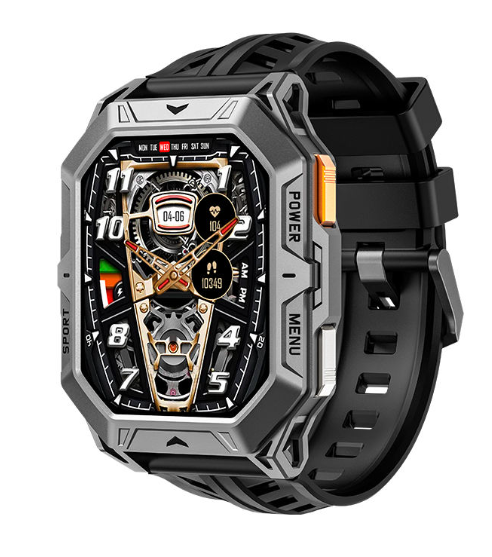
The Reality Behind 'Weeks-Long' Battery Life Claims
Why Marketing Numbers (e.g., '21-Day Battery') Don’t Reflect Real-World Use
When companies test battery life for their products, they do so under lab conditions where everything is turned off or set to minimum settings. Think about it: GPS gets disabled completely, all those pesky notifications go silent, and the screen brightness stays rock bottom. None of this matches what happens when someone actually wears a smartwatch day to day. What really drains batteries in real life? Well, there's constant heart rate tracking while working out, those endless app alerts popping up every few minutes, background processes syncing data without us even noticing, plus people leaving the always-on display feature enabled most of the time. And let's not forget about temperature changes affecting battery performance since lithium-ion cells don't handle extreme heat or cold very well either.
Testing from independent sources keeps showing that those smartwatches claiming super long battery life usually fall short by about half. Most models only make it through around 40 to 60 percent of what manufacturers promise when people actually use them day to day. Take a watch that claims 21 days on a single charge for instance. In reality, folks are lucky if it makes it past 8 or 12 days with all the regular features turned on. This discrepancy isn't because companies are lying though. The problem lies in how these tests are conducted. Labs focus on getting consistent results and finding the absolute best performance possible. But real life? That's different. People switch between apps, track workouts, receive notifications, and generally interact with their devices in ways that drain batteries much faster than controlled lab conditions ever could replicate.
The Physics Constraint: Energy Density vs. Smartwatch Power Demands
Lithium-ion batteries remain bound by fundamental energy density limits—currently around 250–300 Wh/L—while modern smartwatch functionality demands exponentially more power. Even modest features impose steep energy costs:
| Component | Power Draw | Runtime Impact |
|---|---|---|
| Color touchscreen | 20–50 mA | ~40% of total drain |
| Continuous GPS | 30–60 mA | Cuts battery life in half |
| Heart rate sensor | 5–15 mA | ~15% daily drain |
| Bluetooth LE 5.4 | 1–5 mA | ~8% background loss |
Physics dictates that doubling battery life would require either halving feature set or doubling battery volume—both incompatible with wrist-worn ergonomics and user expectations. Until next-generation chemistries (e.g., solid-state or lithium-sulfur) mature, multi-week claims remain achievable only through aggressive feature throttling—not raw energy capacity.
How Leading Long Battery Life Smartwatches Achieve Extended Runtime
Solar Charging and Monochrome Displays: A Benchmark Approach
Long lasting devices typically rely on two main tricks for efficiency: solar panels and those special black and white screens called e-ink or memory-in-pixel displays. When placed near regular indoor lights, these gadgets can gather about 10 to 15 percent extra charge each day. Outdoors they do even better, which means users don't have to worry so much about finding an outlet. The black and white displays themselves are another big plus. They eat up around 60% less electricity compared to colorful AMOLED screens found in most smartphones. This lets people go weeks or even months between charges while still being able to read information clearly and keep track of time properly.
The two pronged strategy isn't ignoring the laws of physics but rather working around them smartly. These high end gadgets manage to stretch battery life by reducing basic power needs through passive solar charging while keeping screen usage to a minimum. Take for instance the Garmin Instinct 2 Solar or the Coros Apex Pro. According to actual testing done in 2023 by Garmin themselves, these watches can last anywhere from 30 to 60 days on a single charge even when constantly tracking vital signs like heart rate and sleep patterns. Pretty impressive when most smartwatches barely make it through a week without needing another recharge.
Ultra-Low-Power Tech: Hybrid Displays and Bluetooth LE 5.4 Integration
True runtime extension comes from intelligent system-level optimization—not just bigger batteries. Leading models integrate:
- Hybrid display architectures, switching seamlessly between ultra-low-power memory-in-pixel mode (for static watch faces and step counts) and full-color interfaces only when needed;
- Bluetooth LE 5.4, which reduces transmission energy by 45% versus Bluetooth 4.2 and enables faster, shorter data bursts—critical for preserving battery during frequent phone syncs;
- Adaptive sensor scheduling, where GPS and optical HR sensors activate only during detected activity windows, cutting idle draw by up to 70%.
This hardware-software synergy allows devices such as the Suunto Core Baro and Polar Grit X Pro to sustain 21+ days of continuous wear—including sleep tracking, stress monitoring, and workout logging—without requiring users to disable essential features.
User Habits: The Deciding Factor in Real-World Long Battery Life Smartwatch Performance
Adaptive Usage Modes — Turning Off Non-Essentials to Double Effective Runtime
The hardware in our devices basically sets what's possible at best, while how we actually use them decides what happens at worst. When people turn off stuff they don't really need, batteries last way longer than expected sometimes doubling their life span. According to findings published in last year's Wearable Tech User Habits Report, folks who switched off things like the screen that stays on all the time, stopped tracking heart rates when not exercising, and turned off GPS when sitting around ended up getting about twice as much out of their batteries. Instead of just seven days between charges, these users reported being able to go two full weeks before needing to plug in again.
Practical adjustments include:
- Enabling theater mode during meetings or travel to suppress all notifications and screen wake-ups;
- Leveraging Bluetooth LE 5.4’s low-latency sync to batch updates every 15–30 minutes instead of maintaining constant connection;
- Scheduling automated sleep mode (which deactivates HR, SpO₂, and motion sensors overnight) via built-in routines.
With 43% of users unaware these settings exist—or leave them disabled by default—activating adaptive modes remains the single highest-impact, zero-cost action to close the gap between marketing claims and lived experience. It doesn’t require new hardware—just informed engagement with what’s already on your wrist.
FAQ
Why do manufacturers' battery life claims often differ from what users experience?
Manufacturers test battery life under controlled, minimal usage conditions, unlike real-world scenarios where features like GPS, notifications, and heart rate tracking are frequently active, leading to faster battery drain.
How can I extend my smartwatch's battery life?
Users can extend battery life by disabling non-essential features, using adaptive modes like theater mode, and managing settings such as Bluetooth syncing and screen on-time.
Are any smartwatches capable of achieving the claimed 'weeks-long' battery life?
Some smartwatches, like the Garmin Instinct 2 Solar, can achieve extended battery life with features like solar charging and energy-efficient displays, but real-world usage still varies.
What advancements help smartwatches achieve longer battery life?
Smartwatches use features like hybrid displays, Bluetooth LE 5.4, and adaptive sensor scheduling to optimize power use and prolong battery life.


