
 EN
EN
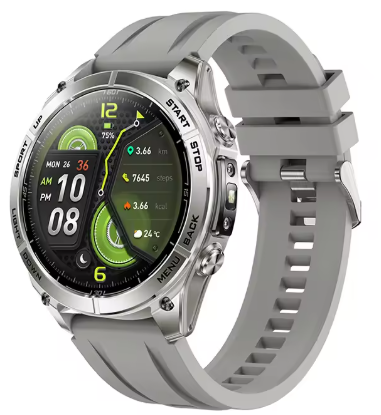
GPS Accuracy and Multi-GNSS Support
Today's smartwatches make use of several Global Navigation Satellite Systems (GNSS) like GPS, GLONASS, Galileo, and BeiDou (BDS) which helps them find locations much better than older models. When a watch can tap into different satellite networks at once, it actually works around those pesky signal problems we all face when walking between tall buildings or deep in the woods. Some testing out in the field has shown that watches using multiple GNSS systems cut down on location mistakes by about 40% compared to ones that only rely on one system. This means people get more accurate directions even when hiking through tricky landscapes where signals tend to fade.
How GPS, GLONASS, Galileo, and BDS Improve Real-World Positioning
The different satellite systems each have their own strong points when it comes to where they work best and how much of the globe they can reach. GPS does really well throughout North America, while GLONASS is better suited for areas near the poles where signals tend to get shaky. Galileo stands out in cities because buildings don't mess with its signals as much as other systems. And then there's BDS, which basically rules over most of Asia and the Pacific region. When these systems work together, they create this overlap effect that fills in those annoying spots where one system alone might fail completely. Take a smartwatch for instance. If someone only had GPS enabled, they'd probably struggle getting a good signal walking down those crowded streets in Tokyo surrounded by tall buildings. But throw in support from both BDS and Galileo? That same watch maintains pretty impressive accuracy, staying within about 1.5 meters horizontally even in tricky conditions. Plus, having multiple constellations means devices can cross-check frequencies to fix problems caused by things like ionospheric delays, making them far more reliable when dealing with atmospheric issues that affect signal quality.
Why Chipset Efficiency and Firmware Optimization Matter More Than GNSS Band Count
Hardware and software integration—not just the number of supported constellations—determine real-world performance. Advanced dual-frequency chipsets (e.g., L1+L5) process signals faster while cutting power consumption by 30% versus legacy receivers. Firmware further refines positioning through:
- Real-time kinematic (RTK) corrections to suppress multipath distortion
- Sensor fusion (accelerometer/gyroscope) during GPS outages
- Dynamic constellation selection based on live signal strength
Testing confirms that a well-optimized dual-GNSS watch consistently outperforms quad-constellation models with outdated firmware. Battery efficiency is equally decisive: intelligent duty cycling extends continuous GPS tracking by up to 8 hours over unoptimized counterparts. Prioritize proven chipset architecture and firmware maturity—not marketing-driven satellite counts.
Fitness and Safety Features Powered by GPS
A smartwatch with GPS transforms outdoor activity by unifying precision fitness metrics with mission-critical safety tools—supporting both goal achievement and personal protection.
Reliable Route Tracking, Elevation, and Pace Metrics for Runners and Hikers
GPS technology makes it possible to map routes with incredible precision, down to just a few centimeters. This helps people stay on track while they're out there and lets them look back at their paths later to see what worked best. Many devices now come with built-in barometric altimeters too, which give pretty accurate elevation readings. These are really important when training on trails or getting used to different altitudes. Getting real-time feedback on running speed means runners can adjust their efforts on the fly, which cuts down on injuries caused by pushing too hard during those long training sessions. According to data published in the Active Lifestyle Report last year, folks who use these kinds of combined features tend to stick with their workouts more consistently and get better results overall, sometimes seeing improvements around 30% higher than those without this tech.
SOS Alerts and Real-Time Location Sharing: Critical Safety Functions of a GPS Smartwatch
The one-touch SOS button sends out emergency signals right away to whoever needs to know, along with exact location details. This matters a lot when someone gets stuck somewhere far from help or finds themselves in dangerous terrain. When combined with live location tracking, people back home can actually see where someone is moving around and get there quicker if something goes wrong. This technology has already reduced average response time by 50% during outdoor rescue operations. This data comes from research published in the Outdoor Safety Journal in 2023. For those exploring solo, these capabilities can turn ordinary GPS smartwatches into pivotal lifeline partners in critical moments.
Sensor Fusion and Environmental Resilience
How Barometer, Compass, and Accelerometer Compensate for GPS Signal Loss
GPS smartwatches have to get creative when satellite signals start fading, which happens all the time in places like city streets surrounded by tall buildings, dense forests, or underground tunnels. That's where sensor fusion comes into play for maintaining location accuracy. The built-in barometer actually senses changes in air pressure as we move up or down stairs, hills, or elevators, giving an idea of our elevation when satellites aren't cooperating. There's also a three-axis accelerometer working behind the scenes, basically watching how our feet hit the ground and what direction we're moving in to figure out how far we've gone. And let's not forget the magnetometer, which acts like a digital compass relying on Earth's magnetic field instead of waiting for those tricky satellite signals. By combining data from all these different sensors, the watch creates a pretty good guess about where we are even when GPS drops out, so our running routes don't get cut off halfway through. This multi-sensor approach works wonders too against pesky interference from electricity and sudden weather changes that would throw off simpler devices with just one type of sensor.
Key Features Compensation Table
| Sensor | Function | GPS Loss Scenario Solved |
|---|---|---|
| Barometer | Tracks altitude via air pressure | Signal obstruction in valleys/cities |
| Accelerometer | Measures movement speed/direction | Tunnel/underground tracking |
| Compass | Maintains heading via magnetism | Dense forest navigation |
Note: Efficient firmware minimizes battery drain by activating sensors contextually—prioritizing synergy over standalone operation.
Battery Life and Outdoor Usability for a GPS Smartwatch
How long a watch lasts on a single charge really matters in practice. Most GPS smartwatches can track activity continuously for around 10 to 20 hours before needing a recharge. When planning trips that last several days, look for watches that come with solar charging capabilities and those special low power GPS settings. Some models actually stretch their battery life past 60 hours using these features. Toughness counts too. Water resistance should be at least 5 ATM if not more, and MIL-STD-810H certification means it can handle impacts, extreme temperatures from below freezing up to hot conditions, plus dust and dirt. These specs matter because nobody wants their navigator failing during critical moments. The screen type makes a difference as well. Transflective MIP displays stay readable even under bright sun and they eat up about half the power compared to regular AMOLED screens based on recent tests from 2023.
FAQ Section
What is the benefit of using multiple GNSS systems in smartwatches?
Using multiple GNSS systems in smartwatches improves location accuracy by approximately 40% compared to those relying on a single system, offering better directions even in challenging environments.
How does a smartwatch maintain position accuracy when GPS signals are weak?
Smartwatches employ sensor fusion, utilizing the barometer, compass, and accelerometer to estimate location by sensing altitude, direction, and movement speed.
What are key considerations for GPS smartwatch battery life?
Key considerations include battery longevity on a single charge, solar charging capability, water resistance, MIL-STD-810H certification for durability, and energy-efficient screen types.
Why do firmware optimization and chipset efficiency matter for GPS smartwatches?
Firmware optimization and efficient chipset design enhance performance, reduce power consumption, and enable better signal processing, leading to reliable positioning even with fewer GNSS bands.


