
 EN
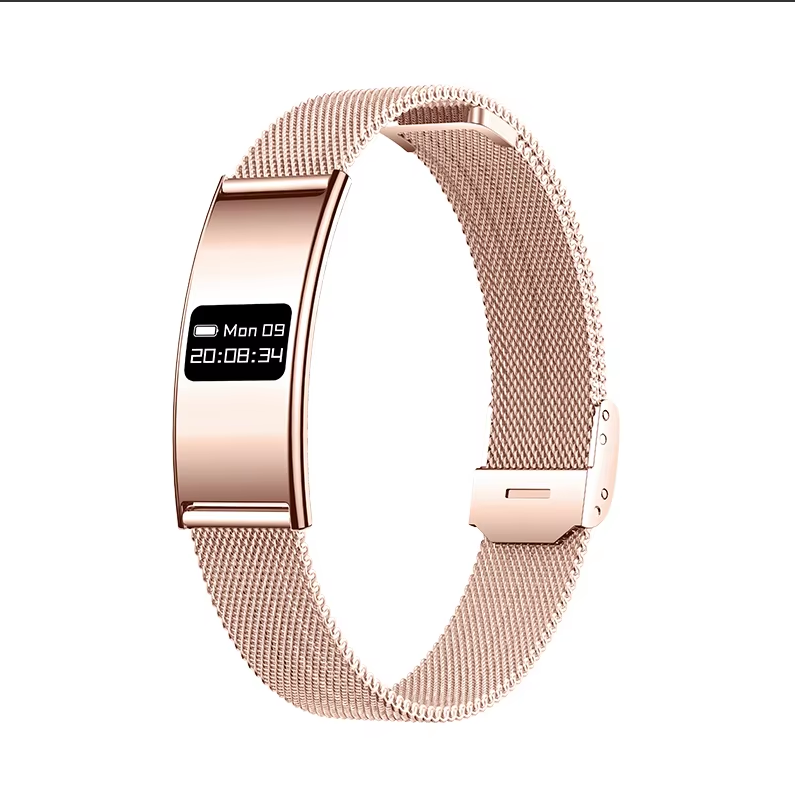
Reading the Body Signals That Stress Leaves Behind
Stress is not just a feeling. It shows up in measurable physiological changes, and that is where a smart watch for women can actually help. The autonomic nervous system controls the balance between sympathetic activity, which drives the fight or flight response, and parasympathetic activity, which supports rest and recovery. When stress rises, heart rate increases, heart rate variability drops, and skin conductance changes. A wearable with the right sensors can detect these shifts in real time. The value is not in the raw numbers themselves. It is in making the user aware of a pattern they would otherwise miss, because stress often builds gradually and goes unnoticed until it becomes a problem.
Heart Rate Variability as the Core Stress Metric
Heart rate variability, usually called HRV, is the most widely used stress indicator in consumer wearables. It measures the variation in time between consecutive heartbeats. A healthy, relaxed system shows more variation, because the parasympathetic branch is actively modulating the heart rhythm. Under stress, that variation narrows. The measurement is taken from the same optical sensor used for heart rate, but the analysis is more complex. HRV is typically calculated overnight during sleep, when movement is minimal and the reading is most reliable. A watch that tracks HRV over weeks can show whether stress is accumulating or whether recovery is improving. Single readings are less useful than trends, and users who understand that get more value from the feature.
Breathing Guides and Real Time Relaxation Tools
Detection is only half the job. A good smart watch for women also offers tools to bring the nervous system back toward balance. Guided breathing exercises are the most common, and they work by slowing the breath to a rate that activates the parasympathetic response. A typical session runs three to five minutes with a visual or haptic cue for inhale and exhale. Some devices adjust the pacing based on live heart rate, which makes the exercise more responsive than a fixed timer. The table below compares common relaxation features.
| Feature | How It Works | Typical Session | Immediate Effect | Long Term Benefit |
|---|---|---|---|---|
| Guided breathing | Paced inhale and exhale cues | 3 to 5 minutes | Moderate | Good with regular use |
| HRV based feedback | Adjusts pacing to live HRV | 5 to 10 minutes | Moderate to good | Good |
| Meditation prompts | Timed audio or vibration | 5 to 20 minutes | Variable | Good |
| Sleep soundscapes | Ambient audio for sleep onset | 30 to 60 minutes | Mild | Mild |
| Stress alerts | Notification when stress detected | Momentary | Awareness only | Good if acted on |
The pattern is that features requiring active participation tend to deliver more benefit than passive ones. A breathing guide that the user actually follows is worth more than a stress alert that gets ignored.
Sleep Tracking and Its Connection to Stress Recovery
Sleep is where the body recovers from stress, and a watch that tracks sleep stages can show whether that recovery is happening. Deep sleep and REM sleep are both involved in emotional processing and physical restoration. A watch that reports how much time was spent in each stage gives the user a way to connect daytime stress with nighttime recovery. The limitation is that consumer sleep staging is not perfectly accurate compared to clinical polysomnography. It is good enough to show trends, but not precise enough to diagnose a sleep disorder. Used with that understanding, it is a useful tool rather than a medical device.
Menstrual Cycle Tracking and Stress Interaction
For many women, stress and menstrual cycle symptoms interact in ways that are hard to untangle without data. Cycle tracking features on a smart watch can log symptoms, predict phases, and correlate them with sleep quality and HRV. Over a few months, patterns often emerge, such as lower HRV during the luteal phase or worse sleep in the days before menstruation. That information can help users plan demanding activities around their cycle and give themselves more recovery time when needed. It is not a treatment for any condition, but it is a practical planning tool that many users find genuinely useful.
A Case Where Awareness Changed Behavior
During a field study for a stress tracking feature, a group of office workers wore watches for eight weeks. The watches logged HRV and sent a subtle notification when stress indicators crossed a threshold. One participant, a project manager in her thirties, reported that the alerts consistently arrived during a specific recurring meeting. She had not previously connected that meeting with physical stress symptoms. With that awareness, she started taking a short walk before the meeting and using a two minute breathing exercise afterward. Her HRV trend over the following weeks showed gradual improvement. The watch did not solve the stress. It made a pattern visible, and the user made the change. That is the realistic role of these tools.
Where These Features Have Honest Limits
It is important to be clear about what a smart watch can and cannot do for stress. It can measure physiological signals and prompt healthy behaviors. It cannot diagnose anxiety, depression, or any clinical condition. It cannot replace professional care. The accuracy of HRV measurements varies with sensor quality, fit, and movement, and some users find that the constant notifications increase their stress rather than reduce it. The best approach is to use these features as one input among many, and to pay attention to how the data makes the user feel, not just what the numbers say.
How Manufacturing Experience Supports Feature Reliability
Stress tracking features depend on sensor accuracy, firmware stability, and consistent build quality. A watch with variable sensor alignment will produce HRV readings that are hard to trust. Shenzhen Karen M Electronics has been developing and producing smart wearable devices since 2014, operating from Shenzhen with a focus on cost effective products and personalized service for global customers. For brands that need reliable sensor performance and stable firmware across orders, that depth of experience in the wearable sector is what keeps these features dependable.
Table of Contents
- Reading the Body Signals That Stress Leaves Behind
- Heart Rate Variability as the Core Stress Metric
- Breathing Guides and Real Time Relaxation Tools
- Sleep Tracking and Its Connection to Stress Recovery
- Menstrual Cycle Tracking and Stress Interaction
- A Case Where Awareness Changed Behavior
- Where These Features Have Honest Limits
- How Manufacturing Experience Supports Feature Reliability


