
 EN
EN
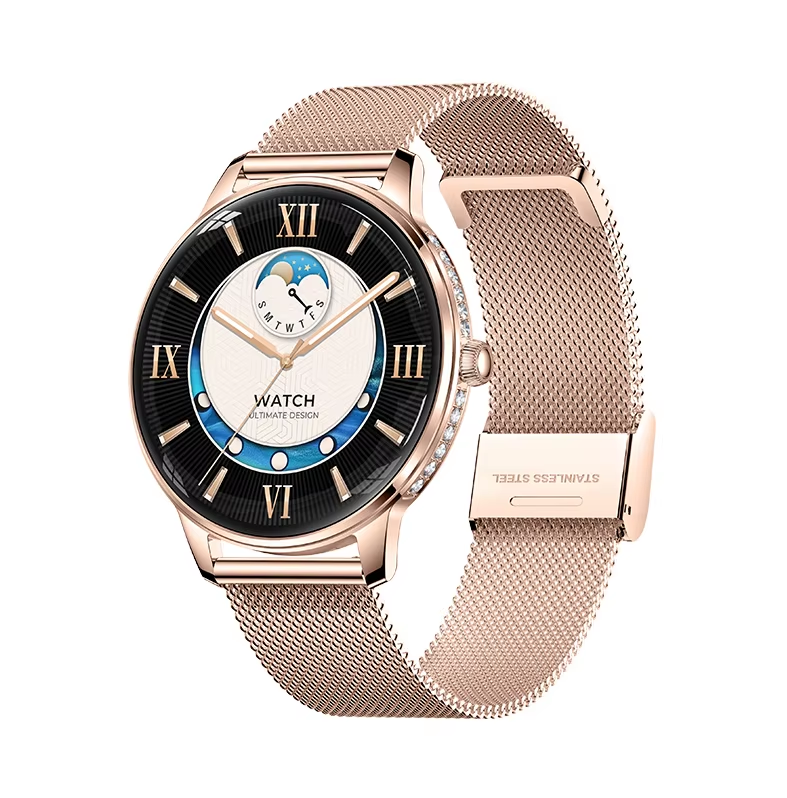
The Optical Sensing Principle Behind the Reading
Heart rate tracking on a smart watch for men relies on a technology called photoplethysmography, usually shortened to PPG. The principle is straightforward. Light emitting diodes on the back of the watch shine green light into the skin, and a photodetector measures how much light is reflected back. Blood absorbs green light more than surrounding tissue, so as the heart pumps and blood volume in the capillaries changes, the reflected light intensity fluctuates in rhythm with the heartbeat. The watch counts those fluctuations to calculate beats per minute. Green light is used because it penetrates skin well and is strongly absorbed by hemoglobin. Some devices add red and infrared LEDs for deeper measurements, which is how blood oxygen and other metrics are derived.
Why Motion Is the Biggest Challenge
The optical method works well at rest, but intense workouts create problems. Every arm swing, foot strike, and muscle contraction shifts the watch on the wrist and changes the contact pressure between the sensor and the skin. That movement introduces noise into the signal that can look like a pulse when it is not. Sweat makes it worse by altering the optical properties of the skin surface and sometimes creating a thin layer between sensor and skin that scatters light. This is why heart rate accuracy during running, burpees, or heavy lifting is harder to achieve than during a walk. Manufacturers address this with accelerometers that detect motion and algorithms that filter out movement artifacts, but no optical sensor is completely immune to the problem.
Sensor Hardware and What Separates Better From Worse
The quality of the optical components and the analog front end makes a measurable difference. A few hardware factors matter.
-
Number and arrangement of LED and photodiode pairs, where more pairs improve signal capture across different wrist positions.
-
Wavelength selection, since green works best for heart rate while red and infrared support additional metrics.
-
Sampling rate, where higher rates capture rapid changes during interval training.
-
Analog front end quality, which determines how clean the raw signal is before processing.
A device with a well designed sensor array and a low noise analog front end will hold a reading during a sprint interval where a cheaper device loses the signal entirely. This is an area where the difference between a budget watch and a mid range one becomes obvious, not on the spec sheet but on the workout summary.
Algorithms and Signal Processing That Make the Data Usable
Raw PPG data is noisy and needs heavy processing before it becomes a heart rate number. The algorithm has to identify the pulse peaks, reject motion artifacts, and handle periods where the signal drops out. Motion artifact rejection is the hardest part. Some systems use accelerometer data to model the movement and subtract it from the optical signal. Others use adaptive filters that learn the noise pattern in real time. The quality of these algorithms often matters more than the sensor hardware itself. Two watches with identical sensors can produce very different results because one has better signal processing. The table below compares typical accuracy across activity types.
| Activity Type | Typical Accuracy Range | Main Challenge | Relative Difficulty |
|---|---|---|---|
| Resting or seated | Within 2 to 5 bpm | Minimal | Low |
| Walking | Within 3 to 8 bpm | Mild motion | Low to moderate |
| Running | Within 5 to 15 bpm | Arm swing, sweat | Moderate to high |
| Interval training | Within 8 to 20 bpm | Rapid changes, motion | High |
| Heavy lifting | Within 10 to 25 bpm | Wrist flexion, grip | Very high |
These ranges are representative and vary widely by device and fit. The pattern is consistent. Accuracy degrades as motion intensity increases, and no optical watch fully escapes this.
Fit and Placement Determine Real World Performance
Even the best sensor performs poorly if the watch is not worn correctly. A few practical rules matter more than most users realize.
The watch should sit snug against the skin, about one finger width above the wrist bone. A loose watch lets light leak in and shifts during movement. Wearing the watch too high or too low moves the sensor away from the best vascular area. For very hairy wrists, the sensor may struggle because hair blocks light transmission. In cold weather, reduced blood flow to the extremities can weaken the signal. Tightening the strap before a workout and loosening it afterward is a small habit that improves accuracy noticeably.
A Case Where Tracking Accuracy Was Tested in Practice
During a product development cycle for a fitness focused watch, a test team ran a comparison against a chest strap monitor, which is generally considered the reference standard for heart rate during exercise. The test involved a thirty minute interval session with alternating sprint and recovery periods. The watch matched the chest strap within a few beats during steady state running but diverged by up to fifteen beats during the sprint intervals. Reviewing the raw data showed that the divergence happened at the moment of peak arm acceleration. The fix involved adjusting the motion rejection algorithm to weight accelerometer data more heavily during high motion periods. After the change, the divergence during sprints dropped considerably. That kind of iteration is what separates a watch that tracks well in the lab from one that tracks well in the gym.
Where Optical Tracking Has Honest Limits
It is worth being direct about limitations. Optical heart rate tracking is not a medical grade measurement. It is a fitness tool, and it works best for trends over time rather than for precise instantaneous readings. Users who need clinical accuracy should use a chest strap or a medical device. Certain conditions, such as very low resting heart rates or irregular rhythms, can confuse the algorithm. Darker skin tones and tattoos can affect light absorption, though newer sensors handle this better than older ones. Cold environments, poor fit, and high motion all degrade accuracy. Understanding these limits helps users interpret their data sensibly instead of treating every reading as exact.
How Manufacturing Consistency Supports Reliable Tracking
Heart rate tracking performance depends on sensor calibration, firmware, and build consistency across production. A batch of watches with variable sensor alignment or inconsistent firmware will produce unpredictable results in the field. Shenzhen Karen M Electronics has been developing and producing smart wearable devices since 2014, operating from Shenzhen with a focus on cost effective products and personalized service. For brands that need consistent tracking performance across orders, that experience in the wearable sector is what keeps the data reliable.
Table of Contents
- The Optical Sensing Principle Behind the Reading
- Why Motion Is the Biggest Challenge
- Sensor Hardware and What Separates Better From Worse
- Algorithms and Signal Processing That Make the Data Usable
- Fit and Placement Determine Real World Performance
- A Case Where Tracking Accuracy Was Tested in Practice
- Where Optical Tracking Has Honest Limits
- How Manufacturing Consistency Supports Reliable Tracking


