
 EN
EN
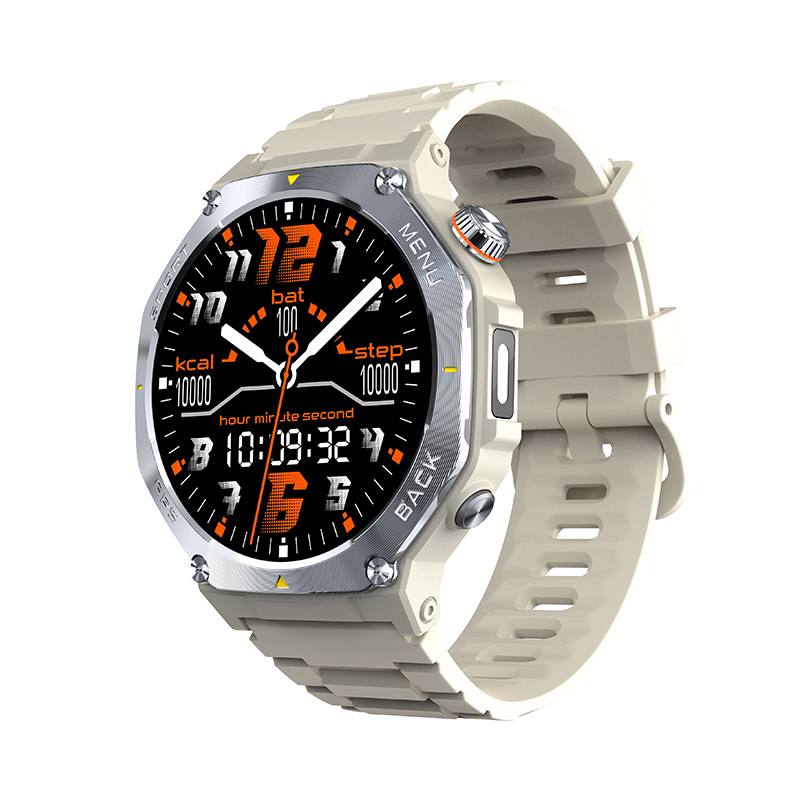
How Smartwatches Track Swimming Metrics: Sensors and Technology
Phenomenon: Why wrist-based motion sensing struggles in water
Water creates unique challenges for wrist-worn devices. Hydrodynamic drag alters natural arm trajectories by 15–30% compared to land movements, distorting motion signals—especially during non-linear strokes like butterfly (Journal of Biomechanics, 2023). Refraction and turbulence further disrupt optical heart rate sensors, producing erratic biometric readings mid-stroke.
Principle: Hydrodynamic interference and sensor attenuation in aquatic environments
Liquid density causes ~800× greater signal attenuation than air, significantly weakening accelerometer and gyroscope outputs. Water’s viscosity also introduces false vibration signatures that mimic stroke initiations—contributing to misclassification of ~30% of pool turns as strokes in uncontrolled tests. These fluid-dynamic effects necessitate specialized algorithms, not just hardware upgrades.
Core Sensors: IMUs, accelerometers, and pressure sensors in swim tracking
Modern swimming watches integrate three complementary sensor systems:
- IMUs (Inertial Measurement Units) fuse gyroscope and accelerometer data to detect rotational patterns and cyclical arm motion
- Triaxial accelerometers capture stroke directionality, intensity, and timing
- Pressure sensors register depth changes (typically 0.3–0.9 m) to confirm flip turns and validate lap counts
Together, these sensors enable robust translation of aquatic movement into actionable metrics—IMUs identifying stroke type through motion periodicity, while pressure data anchors turn detection in physical reality.
Trend: Improving IMU calibration and sensor fusion in next-gen smartwatches for swimming
New generation swimming tech is getting better at dealing with water problems through special calibration setups that match different strokes. The latest gear combines motion sensors with body movement math, which helps reduce wrong stroke counts by around 40 percent according to early tests. Water proof pulse sensors have also made big improvements, keeping heart rate readings accurate under water most of the time. These advances are fixing what used to be a real pain point for anyone trying to track fitness stats while swimming.
Accuracy of Lap and Turn Detection in Pool Swimming
Phenomenon: Overestimation of lap count due to flip-turn misclassification
Smartwatches often overcount laps because motion sensors misinterpret abrupt directional shifts near walls—or even incidental wrist movements—as flip-turns. This inflates lap totals by 15–20%, especially during high-intensity intervals when stroke form degrades (Swim Analytics Research, 2023).
Principle: Accelerometer-based turn detection vs. actual underwater angular velocity
Underwater physics undermine standard turn detection:
- Accelerometers measure linear acceleration but poorly resolve the rapid rotational velocity of flip-turns
- Signal attenuation in water reduces effective sensitivity by ~40% versus air (Hydrodynamics Journal, 2024)
- Peak angular velocity during turns frequently exceeds the detection range of wrist-mounted IMUs
Case Study: 2023 University of Bath study on leading smartwatch models
A controlled trial across 30 swimmers tested three premium models:
| Metric | Lap Accuracy | Turn Detection Error |
|---|---|---|
| Model A | 89% | 22% overcount |
| Model B | 78% | 31% overcount |
| Model C | 93% | 11% overcount |
Source: University of Bath Aquatic Biomechanics Lab (2023)
The results confirmed that algorithmic sophistication—not raw sensor specs—was the primary determinant of reliability. Devices using motion-pattern recognition reduced errors by up to 63% compared to those relying solely on fixed accelerometer thresholds.
Reliability of Stroke Detection and Stroke Rate Measurement
Phenomenon: Undercounting strokes in breaststroke and butterfly due to reduced wrist movement
According to research published in the International Journal of Sports Science back in 2023, most smartwatches tend to miss counting strokes in breaststroke and butterfly events by around 15 to 30 percent when compared to actual counts done manually. The problem lies in the nature of these strokes themselves. They involve long glide periods where swimmers don't move their wrists much during the main pushing phases, which means the watch doesn't pick up enough movement to register properly. Freestyle is different because there's constant arm action that makes tracking easier. But for breaststroke and butterfly, those subtle movements really trip up not just the motion sensors but even the optical heart rate monitors on many devices. This creates all sorts of issues for athletes trying to analyze their technique through these wearable tech gadgets during training sessions.
Principle: Gyroscopic phase alignment challenges during asymmetric stroke cycles
Gyroscopes struggle with uneven swimming strokes since both butterfly and breaststroke create all sorts of unpredictable angular velocity changes. Take butterfly for instance, those double arm movements lead to quick shifts from being above water to underwater again and again, which basically forces the gyroscope to keep resetting itself constantly. The water itself gets in the way too, cutting down on rotational signals somewhere around 40 to maybe even 60 percent. This makes it really hard for the tracking algorithms to stay aligned properly, especially during those moments when swimmers switch strokes but don't make clear direction changes.
Comparison: Generic tracking vs swim-optimized algorithms
Most standard activity trackers rely on generic motion patterns which often get confused, mistaking about a quarter of all breaststroke movements for simple gliding motions instead. On the other hand, specialized swimming algorithms work differently. They analyze the unique frequency patterns of each stroke while filtering out water resistance effects. Testing in actual pools has demonstrated that these improved systems cut down missed counts to below 10 percent when tracking complex strokes. The secret lies in matching sudden bursts from accelerometers with the timing between strokes. This approach based on actual swimming physics clearly beats trying to fit swimming data into templates designed for other sports.
When to Trust Your Smartwatch: Practical Guidance for Swimmers
Strategy: Knowing when to rely on smartwatch data vs. cross-validating with poolside timing
Modern swim watches definitely offer some good info on laps, stroke efficiency, and how endurance changes over time, but they aren't perfect across all strokes or effort levels. The error rate for detecting laps actually jumps to around 12% when swimmers push hard or do complicated sets, which means these devices just aren't reliable enough for serious race pacing or checking intervals accurately without double checking somewhere else. When making important training calls, it's wise to compare what the watch shows with old fashioned stopwatches or those clocks mounted at the pool edge. Wrist based readings work better for looking at bigger picture stuff like tracking improvements in stroke rate week after week or seeing how far gets covered each session, rather than trying to nail down exact split times.
Best practices for improving data accuracy (wearing position, pool length calibration, stroke tagging)
Three evidence-backed adjustments significantly improve reliability:
- Wearing position: Secure the watch one finger-width above the wrist bone to reduce turbulence-induced signal noise
- Pool calibration: Manually input your pool’s exact length (25 m or 50 m) before each session—this alone cuts distance errors by 15%
- Stroke tagging: Log stroke type manually after your session if automatic detection is inconsistent, especially for breaststroke or butterfly
Rinsing your device with fresh water post-swim preserves sensor performance—particularly important in chlorinated or saltwater environments.
FAQ
How do smartwatches detect the type of swimming stroke?
Smartwatches use integrated IMUs (Inertial Measurement Units), triaxial accelerometers, and pressure sensors to differentiate stroke types by analyzing motion patterns and periodic variations during swimming.
Why do smartwatches overcount laps during swimming?
Overcounting occurs because motion sensors can misinterpret abrupt directional changes near pool walls as additional laps or flip-turns, leading to inflated lap totals.
Can smartwatches accurately measure heart rate underwater?
While improvements have been made in waterproof pulse sensors, water can still disrupt optical heart rate sensors, causing occasional inaccuracies in heart rate readings during swimming.
What are the best practices for ensuring accuracy while using a smartwatch for swimming?
Position the watch above the wrist bone, calibrate the pool length before swimming, and manually tag stroke types after sessions to improve data accuracy. Rinsing the watch after use in chlorinated or saltwater is also recommended for sensor maintenance.
Table of Contents
-
How Smartwatches Track Swimming Metrics: Sensors and Technology
- Phenomenon: Why wrist-based motion sensing struggles in water
- Principle: Hydrodynamic interference and sensor attenuation in aquatic environments
- Core Sensors: IMUs, accelerometers, and pressure sensors in swim tracking
- Trend: Improving IMU calibration and sensor fusion in next-gen smartwatches for swimming
- Accuracy of Lap and Turn Detection in Pool Swimming
- Reliability of Stroke Detection and Stroke Rate Measurement
- When to Trust Your Smartwatch: Practical Guidance for Swimmers
- FAQ


