
 EN
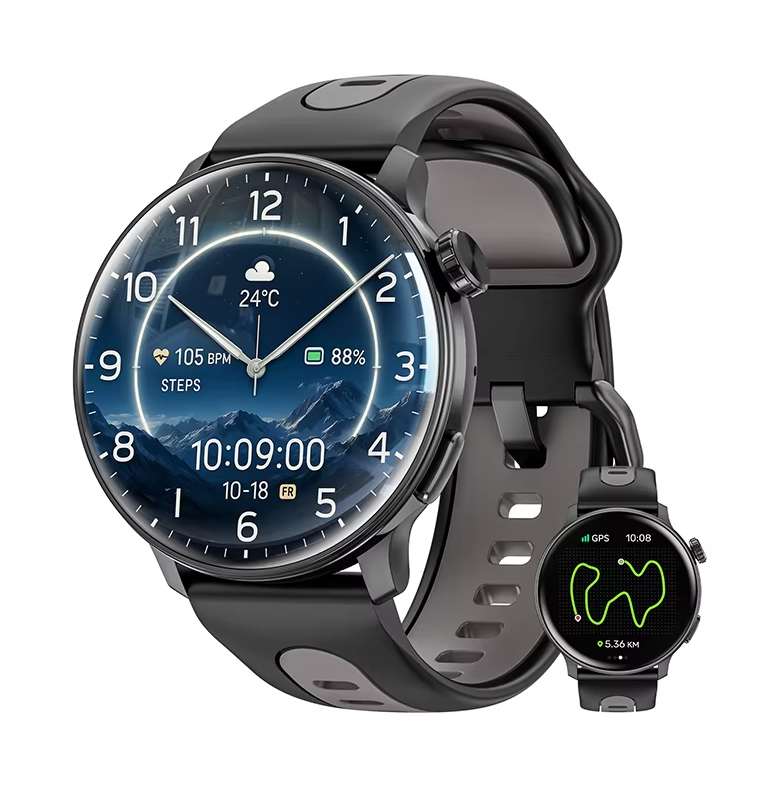
Overcoming the Bulky Plastic Stigma Through Micro-Stacked Architecture
Early fitness trackers forced buyers into an annoying compromise: wear a chunky black rubber brick on the wrist to count daily steps, or wear a classic mechanical timepiece and give up digital health notifications entirely. Bridging that divide required rethinking internal printed circuit board layout from the ground up. Engineering a modern fashion smart watch starts with high-density micro-stacking inside a CNC-machined zinc alloy or 316L austenitic stainless steel middle frame. By utilizing laser-cut flexible printed circuits and curved high-density lithium-polymer pouch cells, hardware engineers shave up to three millimeters off the total vertical profile without sacrificing multi-day battery endurance. On the exterior, physical vapor deposition vacuum coating replaces flat spray paint with micron-thin titanium nitride or zirconium layers in brushed rose gold, warm champagne, or mirror-polished silver. Paired with diamond-cut chamfered bezels and rotary crowns with tactile mechanical clicks, the chassis catches ambient room light just like traditional Swiss horology rather than looking like a miniature computer screen strapped to the arm.
Full-Lamination AMOLED Optics and Biometric Sensor Integration
True visual elegance falls apart the moment a wearable screen turns on and reveals a washed-out, bluish gray rectangle framed by thick black dead borders. Achieving the illusion of a physical watch dial under bright outdoor sunlight or dim candlelit restaurants depends on three optical and structural engineering breakthroughs:
-
On-cell full lamination between the 2.5D curved cover glass and the AMOLED display panel: Eliminating the microscopic air gap between the touch lens and the organic light-emitting diodes boosts contrast ratios beyond 100,000 to 1, allowing black pixels to turn off completely and blend seamlessly into the polished outer bezel.
-
Multi-wavelength photoplethysmography optical lenses flush-mounted into the rear housing: Instead of a sharp plastic bump digging into the wrist skin, Fresnel-patterned sapphire or polymethyl methacrylate back windows sit nearly flat against the radius bone while reading continuous heart rate and blood oxygen saturation cleanly.
-
Acoustic membrane sealing and waterproof magnet-assisted charging ports: Complying with ISO 22810 water resistance standards and IEC 60529 IP68 ingress benchmarks requires hydrophobic GORE-style acoustic vents over the Bluetooth calling microphone and corrosion-resistant gold-plated pogo pins that survive daily handwashing and sudden rainstorms.
Engineering Comparison Across Wearable Design Generations
Comparing internal component packaging and exterior surface metallurgy explains why contemporary dress wearables outperform both legacy step counters and traditional quartz watches.
| Structural & Functional Attribute | Legacy Sport Fitness Band | Traditional Quartz Dress Watch | Modern Fashion Smart Watch | Direct User & Retail Impact |
|---|---|---|---|---|
| Case Metallurgy & Surface Finish | Injection-molded polycarbonate or ABS | Brass or stainless steel with PVD plating | CNC alloy or 316L steel with multi-layer PVD | Delivers fine jewelry aesthetics without plastic wear marks |
| Display Optics & Bezel Ratio | Recessed TFT LCD with visible air gap | Physical brass dial and mineral glass | Full-lamination AMOLED with ultra-narrow bezel | Deep pure blacks and sunlight-readable analog watch faces |
| Biometric & Daily Utility | Basic pedometer and single-LED pulse | Timekeeping only, zero health telemetry | Multi-channel HR, SpO2, sleep, Bluetooth voice calls | Tracks wellness discreetly during client meetings |
| Ingress Protection Standard | Basic sweat resistance | 3 ATM splash resistance (ISO 22810) | IP68 (IEC 60529) or 5 ATM sealed chassis | Survives swimming, cosmetics exposure, and handwashing |
The technical matrix above highlights why aesthetic buyers no longer accept low-grade TFT screens: when an AMOLED panel runs an Always-On Display analog pointer theme, the zero-power black pixels make the illuminated hands appear to float inside a genuine mechanical case.
Field Lessons from a Paris Lifestyle Boutique Private-Label Overhaul
Treating a lifestyle wearable like a cheap promotional gadget can ruin a retail brand's seasonal accessory launch. During a winter holiday rollout for a multi-store French fashion and leather-goods chain headquartered near Paris, the merchandising director introduced a private-label wearable line built around a budget polycarbonate housing and a non-laminated TFT screen. Within three weeks, store managers reported high return rates and poor counter engagement. Shoppers trying the units on under bright boutique halogen spotlights noticed an obvious gray square glowing inside the round bezel, and the painted silver plastic lugs began showing dark scuff marks after a few days of rubbing against metal handbag buckles. Furthermore, Bluetooth voice calls sounded muffled because the speaker cavity lacked a proper acoustic chamber. Re-engineering the product line for the following autumn with an experienced smart wearable manufacturer turned the category into a top seller. The upgraded chassis utilized a slim 9.8-millimeter vacuum-plated stainless steel bezel, a 1.32-inch full-lamination AMOLED display running sixty-hertz smooth scrolling, and a high-sensitivity MEMS microphone paired with dual-mode single-chip Bluetooth connectivity. Once shoppers saw crisp, glare-free guilloche watch faces and felt the cool weight of real polished metal on their wrists, unit sell-through tripled across forty retail locations.
Battery Physics Trade-Offs and Sourcing Custom Wearable Solutions
Honest product engineering requires acknowledging the physical laws governing battery chemistry inside petite watch cases. A slim thirty-nine-millimeter dress watch cannot house the massive battery cell found inside a rugged fifty-millimeter outdoor expedition unit. If a user keeps the Always-On Display cranked to maximum brightness alongside continuous twenty-four-hour blood oxygen polling and frequent Bluetooth phone calls, runtime naturally compresses from a full week down to three or four days. Educating users to enable wrist-raise wake gestures and scheduled nighttime sleep modes balances ultra-thin jewelry proportions with dependable multi-day stamina.
For fashion brands, regional distributors, and consumer electronics retailers seeking to build competitive wearable lines that unite refined jewelry craftsmanship with dependable health and communication features, Karen M offers over a decade of dedicated R&D, manufacturing, and global service experience from Shenzhen. By combining advanced micro-assembly technology, trend-forward industrial design, and flexible OEM/ODM customization, the team empowers global partners to launch cost-effective smart wearables that look as impressive as they perform.
Table of Contents
- Overcoming the Bulky Plastic Stigma Through Micro-Stacked Architecture
- Full-Lamination AMOLED Optics and Biometric Sensor Integration
- Engineering Comparison Across Wearable Design Generations
- Field Lessons from a Paris Lifestyle Boutique Private-Label Overhaul
- Battery Physics Trade-Offs and Sourcing Custom Wearable Solutions


